In This Article
For a small business, electricity is one of the few big costs that arrives every month whether sales are strong or weak. A bakery's ovens, a clinic's air conditioning, a workshop's machines, an office's servers: all of them draw power during the same daylight hours when the sun is strongest. That overlap is why solar energy for small businesses in Bangalore has moved from "nice idea" to serious financial planning. This guide explains the real benefits, what to expect from costs and tax treatment, and the questions to ask before you invest, without overpromising on savings.
Why Bangalore Is Well Suited to Commercial Solar
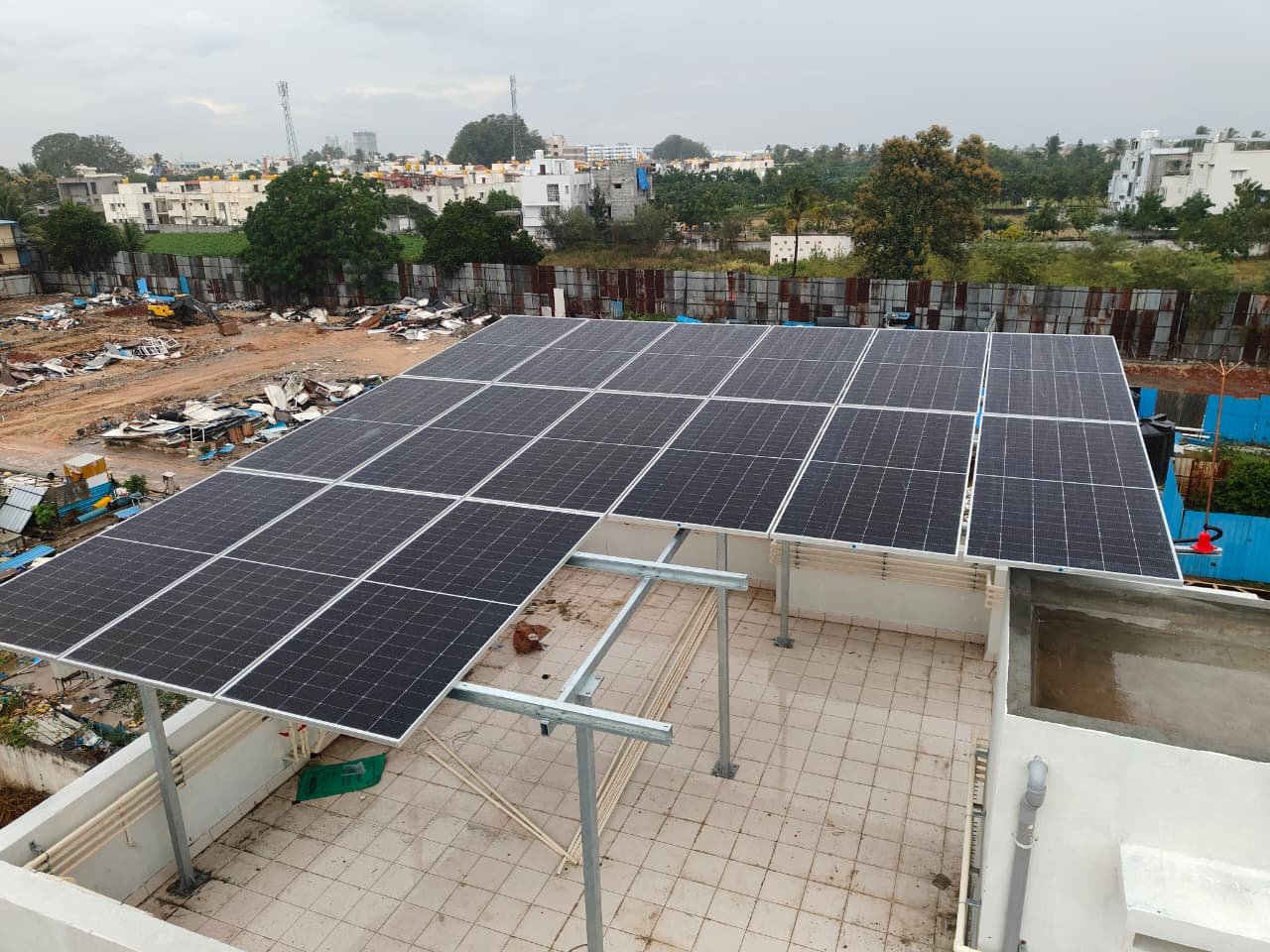
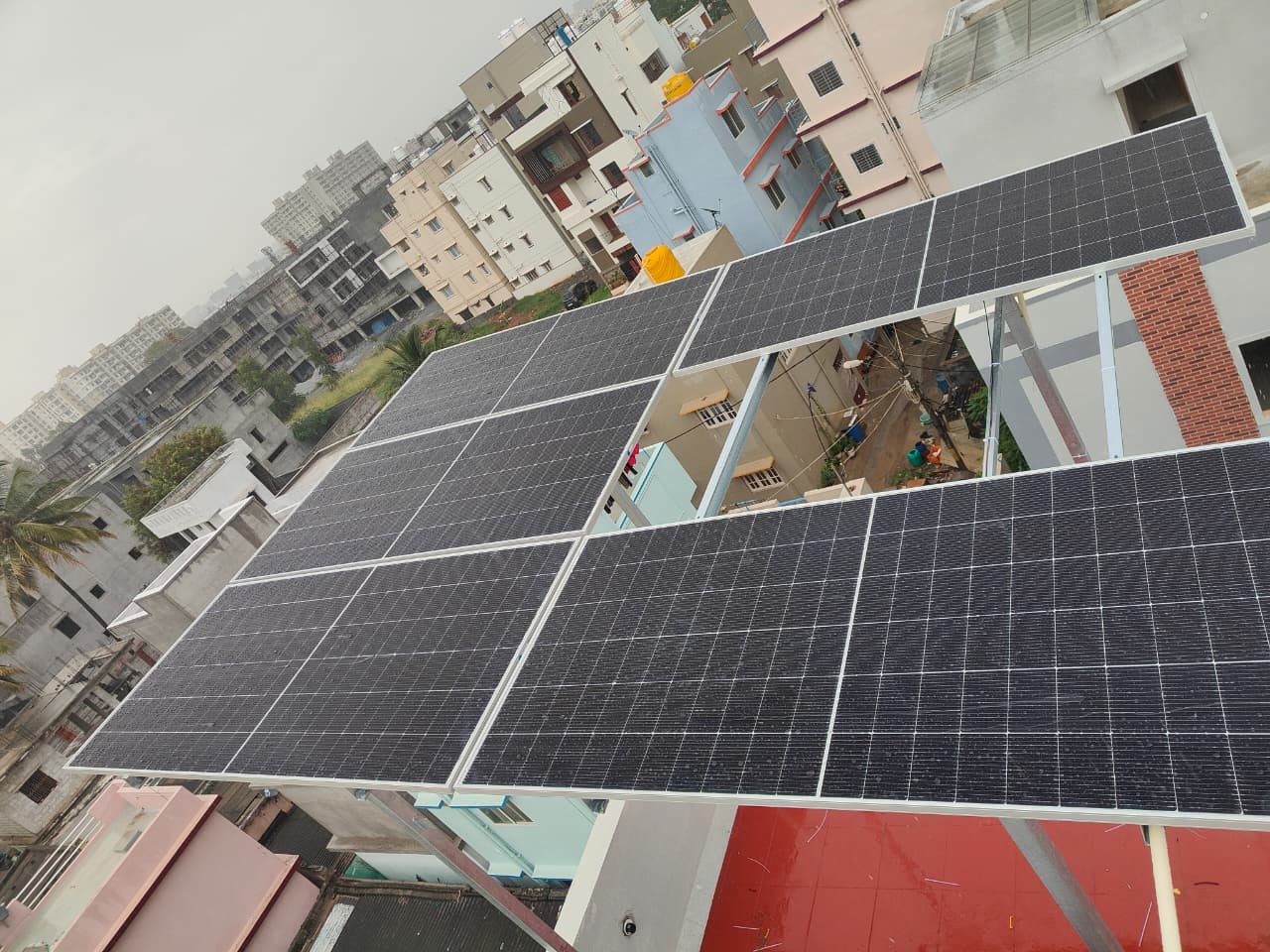
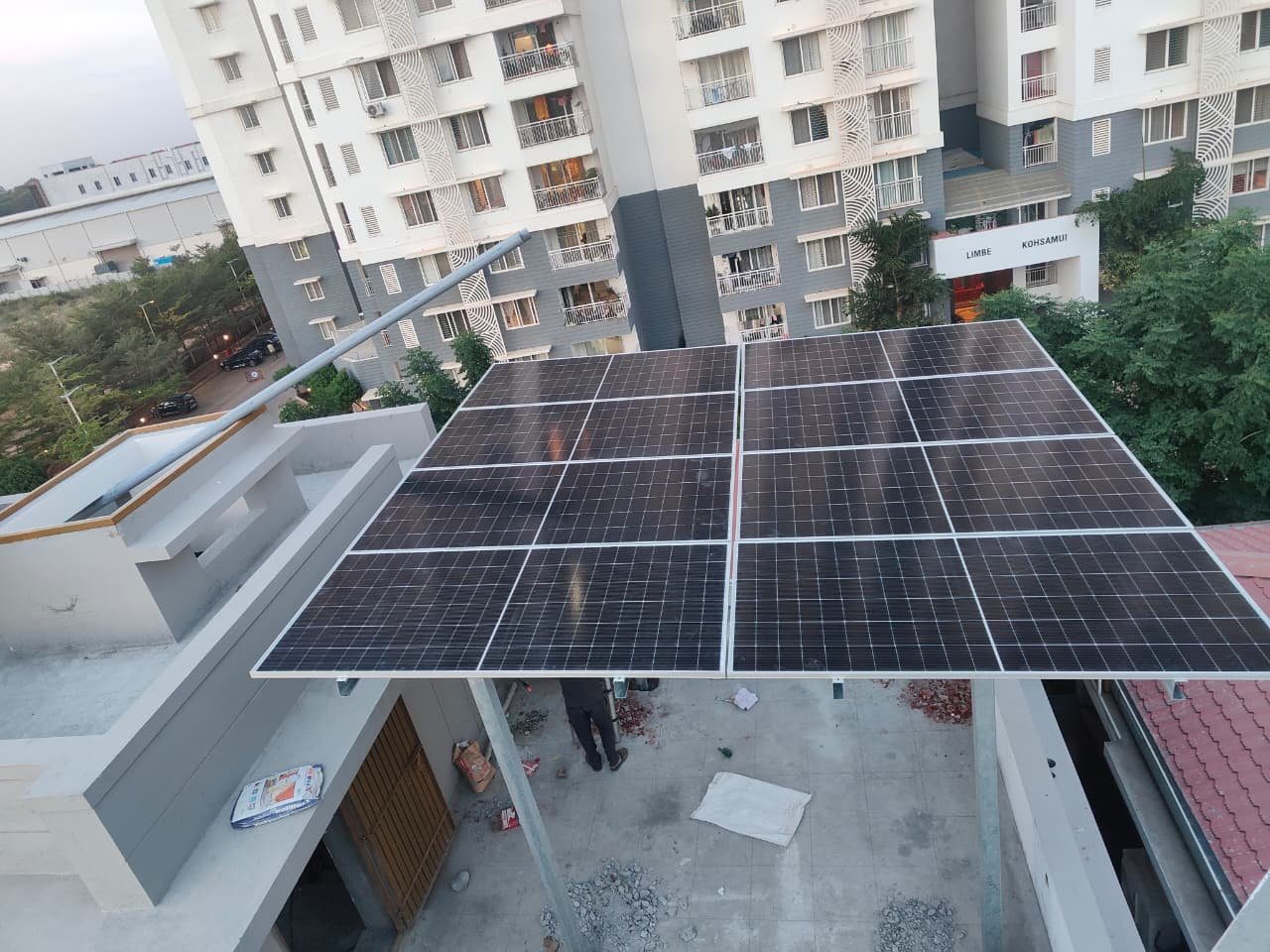
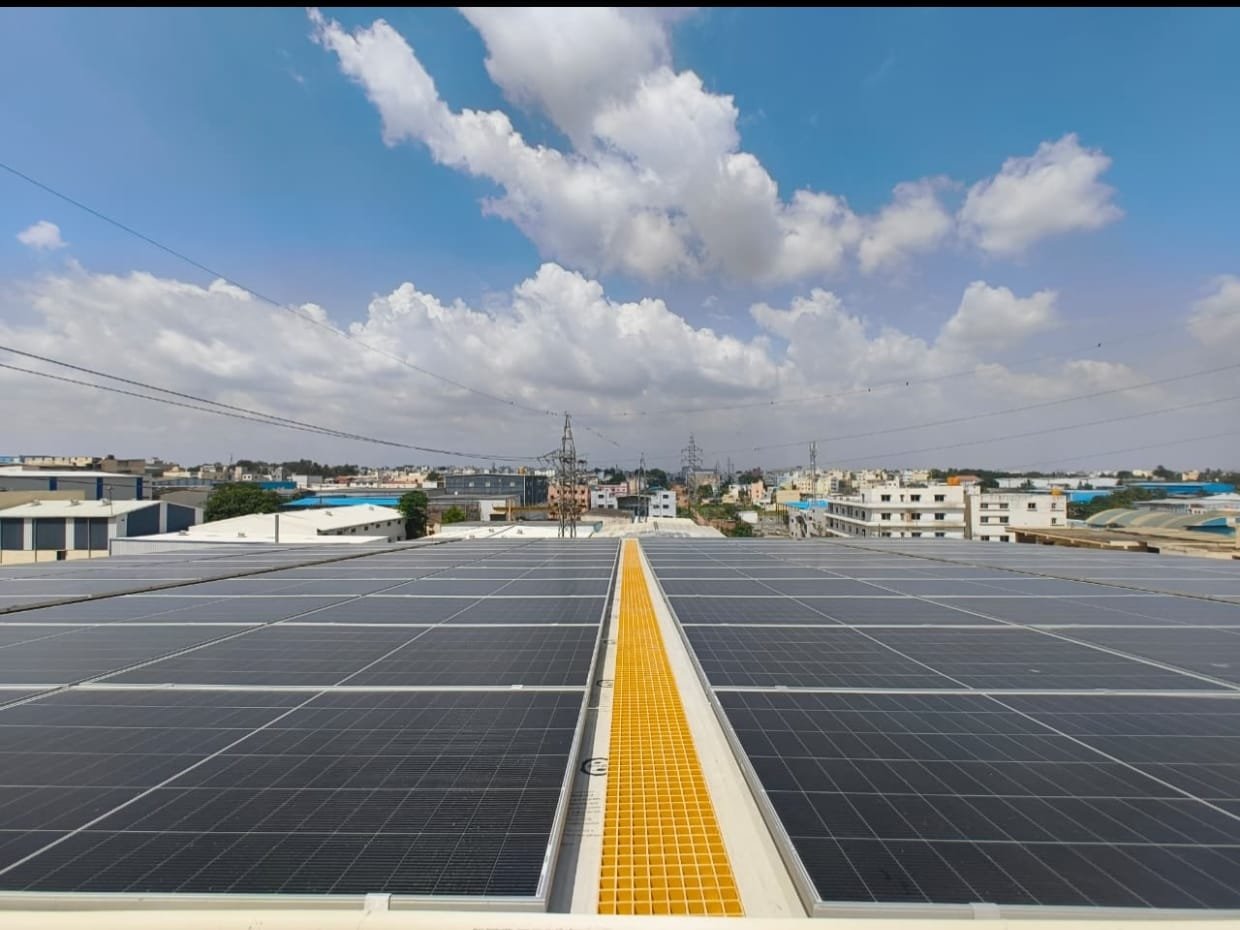
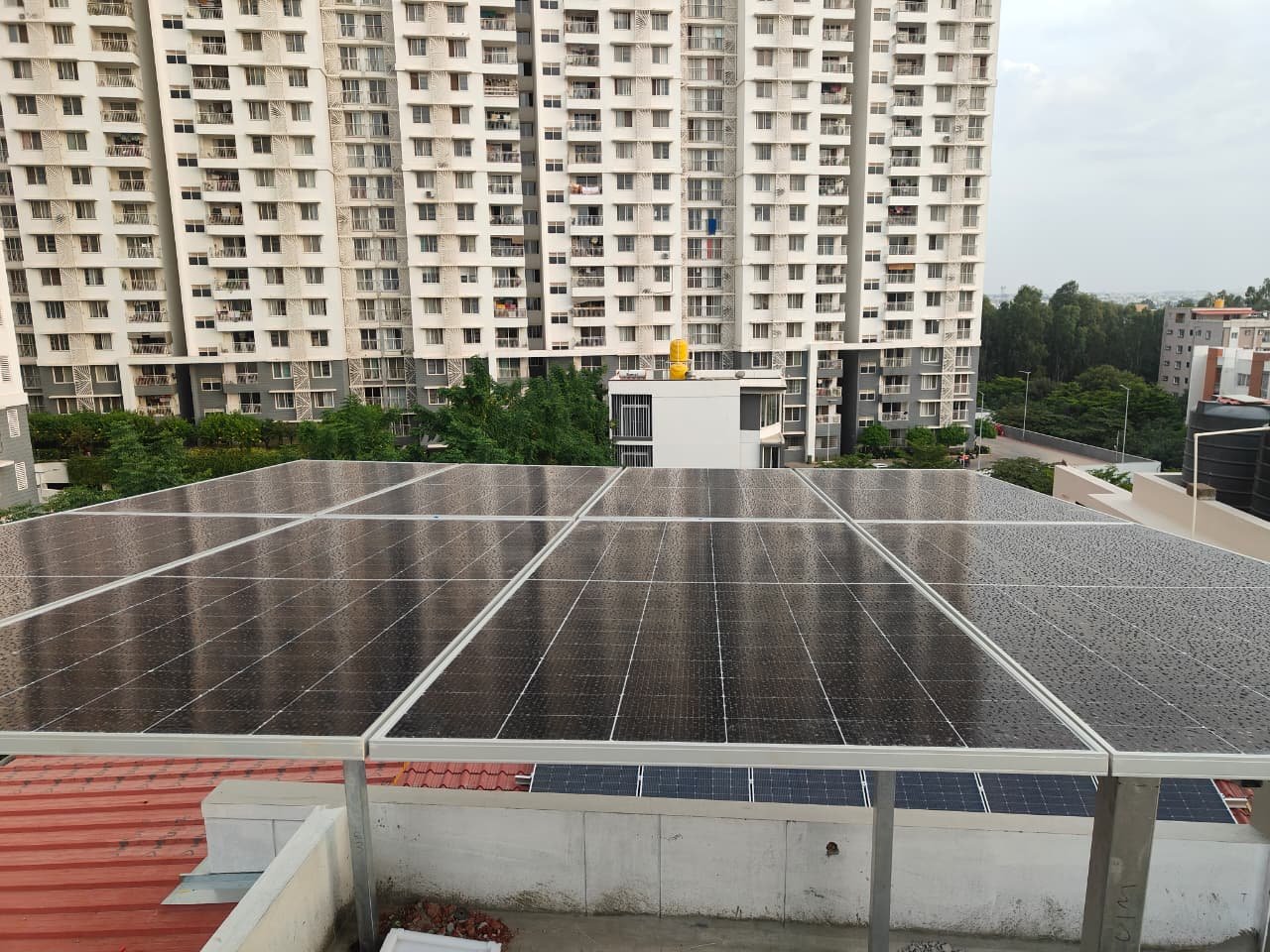
Bangalore receives plenty of sunshine through most of the year, with a moderate climate that suits steady solar output. Many small businesses here operate mainly in the daytime, such as shops, offices, clinics, restaurants, schools, workshops and small factories. When your power use peaks while the sun is shining, a rooftop system can supply a large share of your demand directly, which is the most efficient way to use solar.
Benefit 1: Lower and More Predictable Electricity Bills
The most direct benefit is a smaller power bill. Every unit your panels generate and you use is a unit you do not buy from the grid. Commercial electricity is typically priced higher than residential power, so each unit you replace often saves more. Because panel output is predictable and the equipment is paid for once, solar also shields your budget from future tariff increases. The size of your saving depends on your consumption, roof area, tariff category and how much of your use falls in daylight hours, so a proper energy audit comes before any promise of numbers.
Benefit 2: Net Metering Turns Surplus Into Credit
With a grid-connected system and net metering, power you do not use, for example on a weekend or holiday, is exported to the grid and credited against your bill rather than wasted. Karnataka bills rooftop solar under rules set by the Karnataka Electricity Regulatory Commission, and the exact treatment of exports, limits and approvals for commercial connections can differ from residential ones. Confirm the current rules for your connection with your installer and your electricity company before you finalise system size.
Benefit 3: Tax Advantages That Can Shorten Payback
Here small businesses often get more from solar than homeowners do. Commercial and industrial solar systems do not qualify for the central PM Surya Ghar subsidy, which is aimed at households. Instead, the financial case usually rests on tax treatment:
- Accelerated depreciation. Solar equipment generally qualifies for depreciation of up to 40 percent in the first year under the Income Tax Act, which can reduce taxable profit significantly in year one.
- Additional depreciation. Some manufacturing businesses may be eligible for further first-year depreciation, depending on how the plant is classified and commissioned.
- GST input credit. Registered businesses may be able to claim credit on eligible GST paid on equipment, subject to their tax position.
These benefits only help if your business pays tax and can use the deductions, and rules change, so speak to your chartered accountant before you decide. Do not assume the benefit applies to your business.
Benefit 4: A Fixed Asset That Works for 25 Years or More
Most quality panels carry long performance warranties, typically 25 years or more, and inverters are replaced on a shorter cycle. After the system pays for itself, a large part of its remaining life delivers savings with low running costs. Many commercial buyers commonly cite payback periods of around three to five years once tax treatment and tariffs are included, though yours depends on your own numbers, and it is wise to treat this as a range rather than a promise.
Benefit 5: Protection From Rising Tariffs
Grid tariffs tend to move upward over time. By generating a part of your own power, you reduce your exposure to these revisions. This is valuable for businesses with thin margins, such as restaurants and small manufacturers, where a few percentage points of cost can matter.
Benefit 6: Better Brand Image and Customer Trust
Customers, corporate clients and landlords increasingly notice sustainability. A visible rooftop system, or a line in your supplier profile that you run on solar, can support your reputation. For businesses that supply larger companies, lower emissions can also help in procurement conversations.
Benefit 7: Backup Options With Hybrid Systems
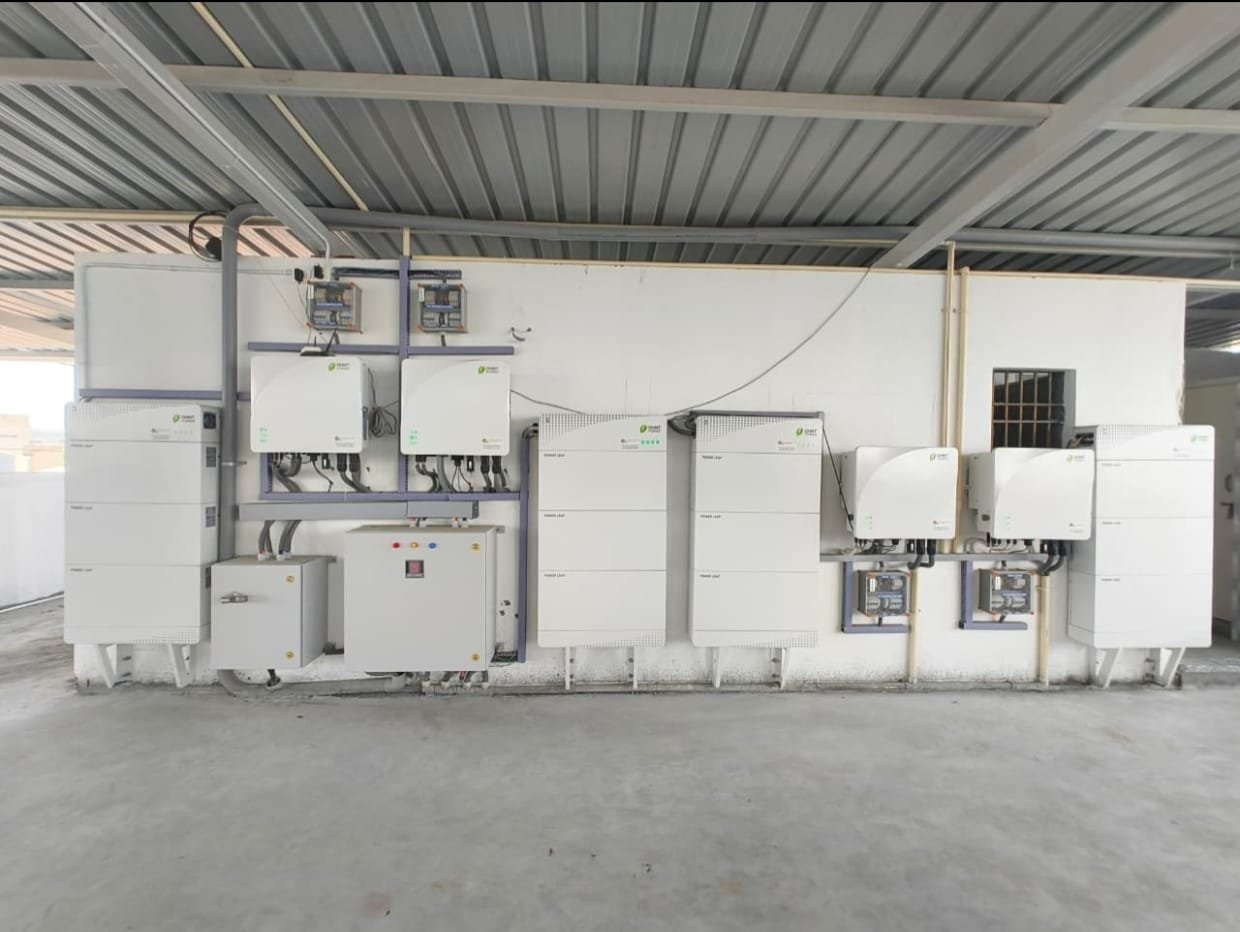
If power cuts disrupt your work, a hybrid system with batteries can keep critical loads running, such as billing counters, lights, refrigeration or computers. Batteries add cost, so size them for essential equipment rather than the whole building. For businesses with stable power, a simpler on-grid system is usually more economical.
Benefit 8: Financing Makes It Accessible
You do not always need to pay the full amount upfront. Business solar loans, MSME-focused green financing and EMI options can spread the cost so that monthly savings offset a large part of the instalment. Interest rates and terms vary by lender, so compare offers and check that you understand the total cost of the loan.
Which Small Businesses Benefit Most?
| Business Type | Why Solar Fits |
|---|---|
| Offices and IT firms | Daytime computing and cooling loads |
| Clinics and diagnostic labs | Steady daytime power, air conditioning |
| Restaurants and bakeries | Cooking, refrigeration and ventilation |
| Small factories and workshops | Machine loads during working hours |
| Schools and tuition centres | Daytime use, large roof areas |
| Cold storage and warehouses | Continuous cooling and lighting |
| Showrooms and retail shops | Lighting and air conditioning during opening hours |
What Does Commercial Solar Cost?
Costs vary with system size, components, roof type and installation conditions. As a rough guide, small commercial systems of about 10 kW commonly cost in the region of a few lakh rupees, with larger systems costing proportionally more per project but often less per kW. Treat any figure you see online, including this one, as indicative, and ask for an itemised quote that separates equipment, installation, approvals and warranty.
How to Go Solar: A Simple Roadmap
Step 1: Energy audit
Review 6 to 12 months of electricity bills and your daytime load.
Step 2: Roof assessment
Check usable area, shading, structural strength and roof material.
Step 3: System design
Choose on-grid or hybrid, and the right capacity.
Step 4: Approvals
Your installer applies for feasibility and net metering with your electricity company.
Step 5: Installation
Commercial systems usually take longer than home systems, depending on size.
Step 6: Commissioning and monitoring
The net meter is installed and the system is tracked.
Step 7: Maintenance
Regular cleaning and annual inspection keep output stable.
Common Mistakes Small Businesses Make
- Sizing the system by roof space instead of actual daytime consumption
- Assuming a subsidy exists for commercial systems when the central scheme is residential
- Ignoring tax advice, then discovering the depreciation benefit cannot be used
- Choosing a vendor on price alone, without checking components, warranty and after-sales service
- Skipping a structural check on older roofs
- Not confirming current net metering and equipment-listing requirements for commercial projects before signing
How Aditya Green Energies Helps Small Businesses
Aditya Green Energies is a Bangalore-based solar company that serves homes, businesses and industrial customers, and handles design, installation, approvals coordination and after-sales support. You can see completed residential, commercial and industrial installations in the project gallery, read more on the blog, and get answers on warranties and maintenance on the FAQ page. For an overview of how installation works from site visit to commissioning, see our solar installation process.
Want to know what solar could save your business? Contact Aditya Green Energies for a free site assessment and an itemised quote.
Frequently Asked Questions
Is solar worth it
for a small business in
Bangalore?
For many businesses with daytime power use and a suitable roof, yes. The strength of the case depends on your tariff, consumption, roof and tax position, so a site assessment gives the real answer.
Is there a
government subsidy for commercial
solar?
The central PM Surya Ghar subsidy is for residential rooftops. Commercial systems usually rely on tax benefits such as accelerated depreciation, financing options and bill savings instead.
What is
accelerated
depreciation?
It lets a business claim a larger share of a solar system's cost as depreciation in the first year, reducing taxable profit. It generally applies at up to 40 percent in year one, but you should confirm your eligibility with a chartered accountant.
How long is the
payback period?
Many commercial installations are commonly quoted at around three to five years, depending on tariff, usage and tax treatment. It is a range, not a guarantee.
Will solar keep
my shop running during a power
cut?
A standard on-grid system shuts down during an outage for safety. To keep essentials running, you need a hybrid system with batteries.
Can I finance a
commercial solar
system?
Yes. Business solar loans, MSME green financing and EMI options are available from various lenders. Compare rates and total cost before choosing.
How much
maintenance does a commercial system
need?
Mostly periodic cleaning and an annual inspection. Many installers offer maintenance plans, which are worth considering for larger systems.
Final Takeaway
The benefits of solar energy for small businesses in Bangalore come down to a simple idea: replace a rising, uncontrollable cost with an asset you own, supported by tax advantages and financing that homeowners do not get in the same way. The best results come from honest sizing, a clear view of your tax position and a reliable installer. Start with an energy audit, ask for itemised numbers and treat every payback claim as an estimate until it is built on your own bills.