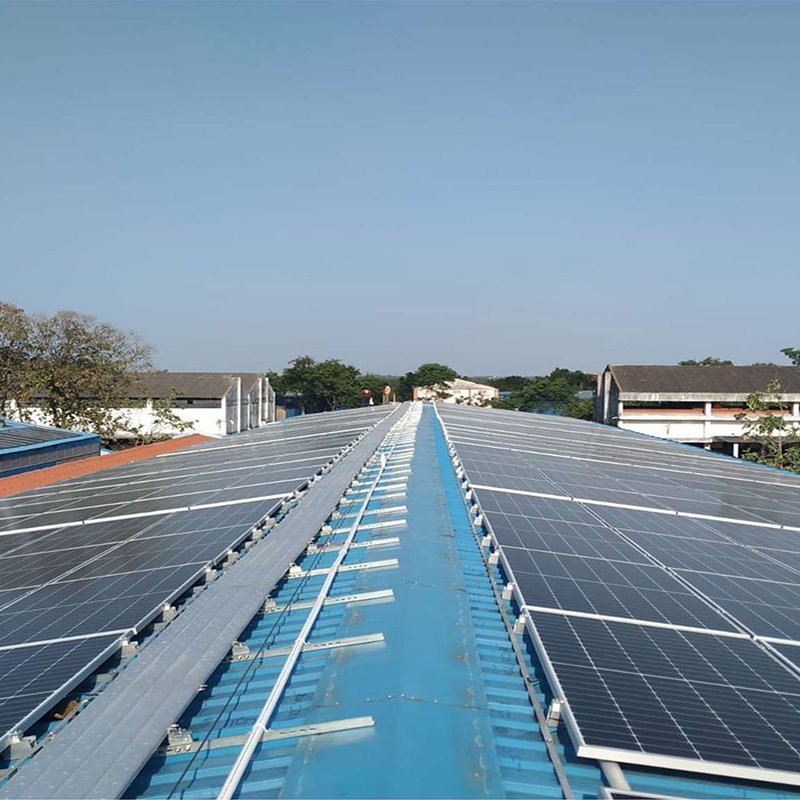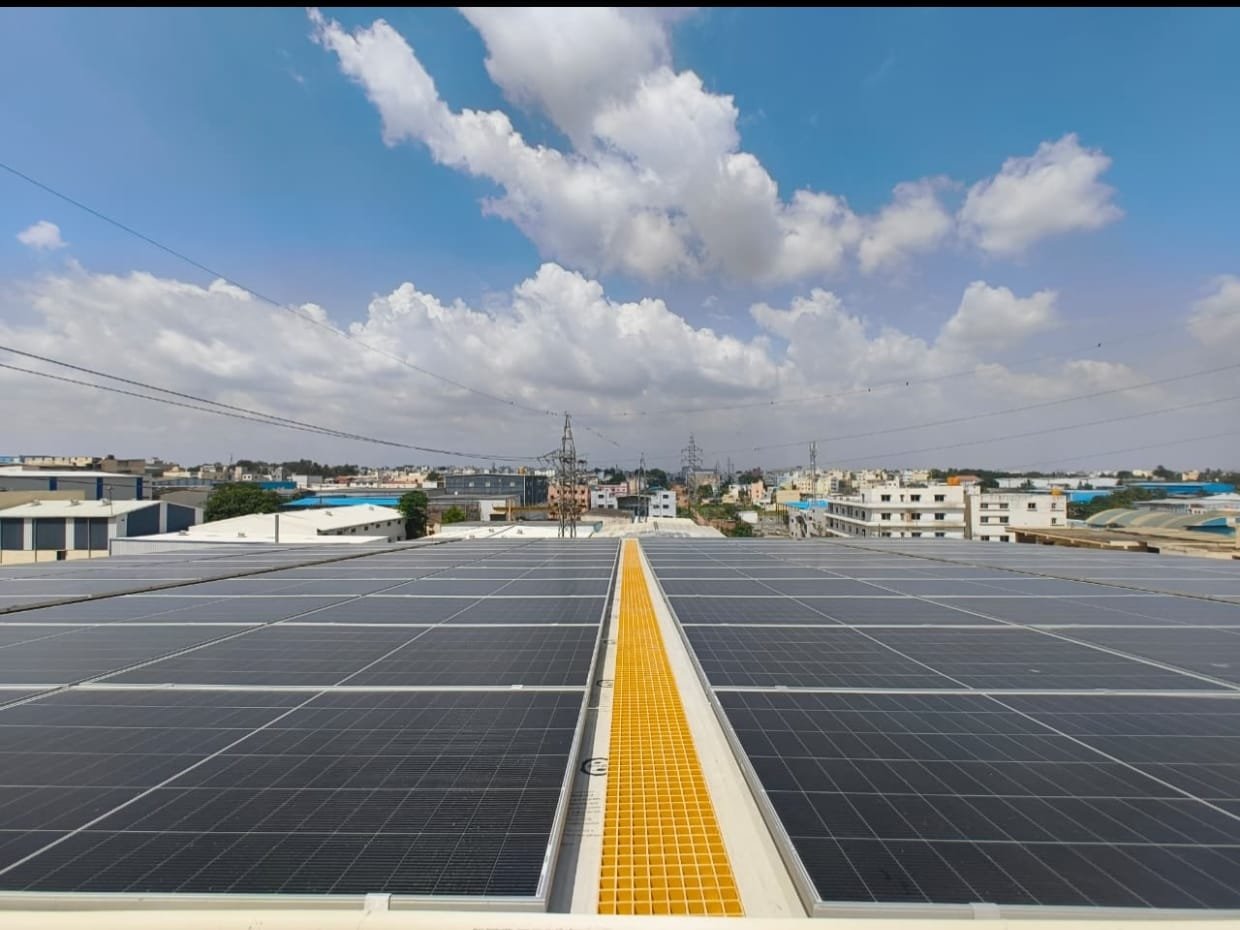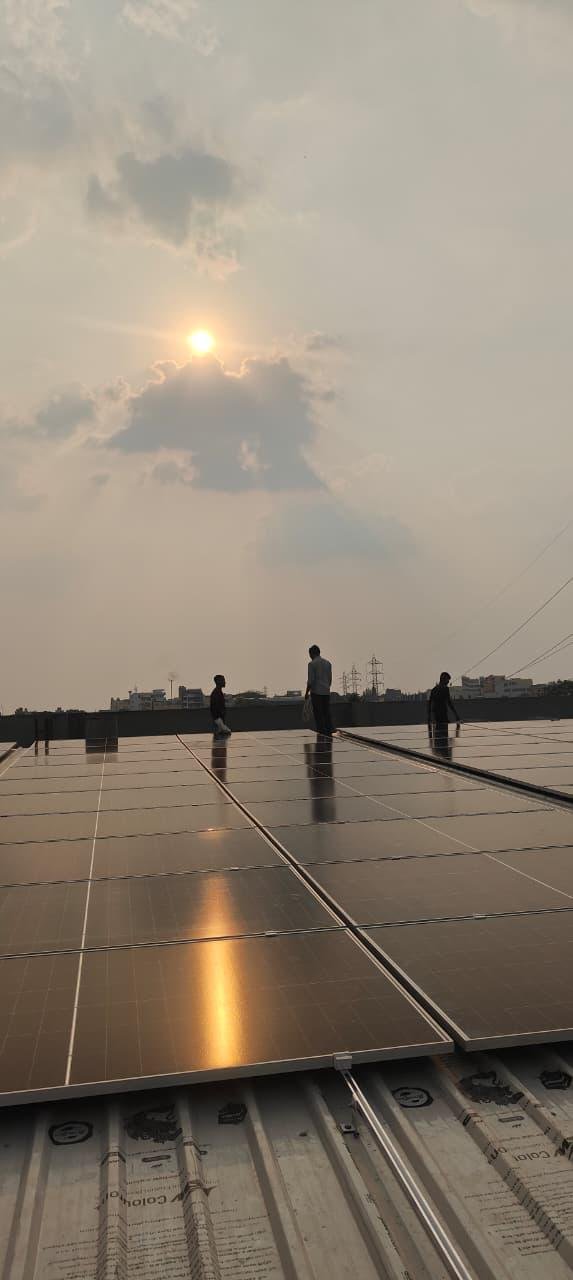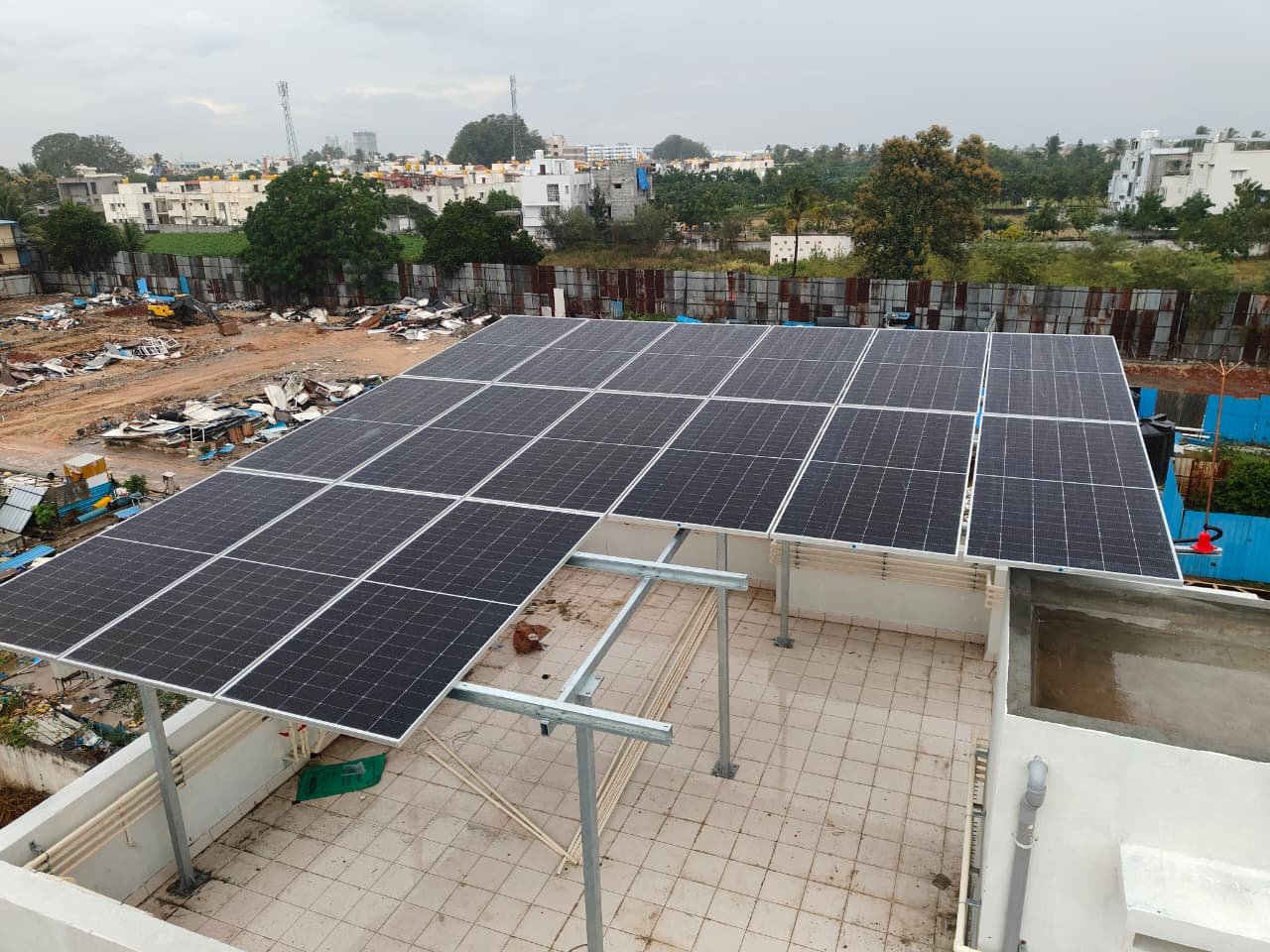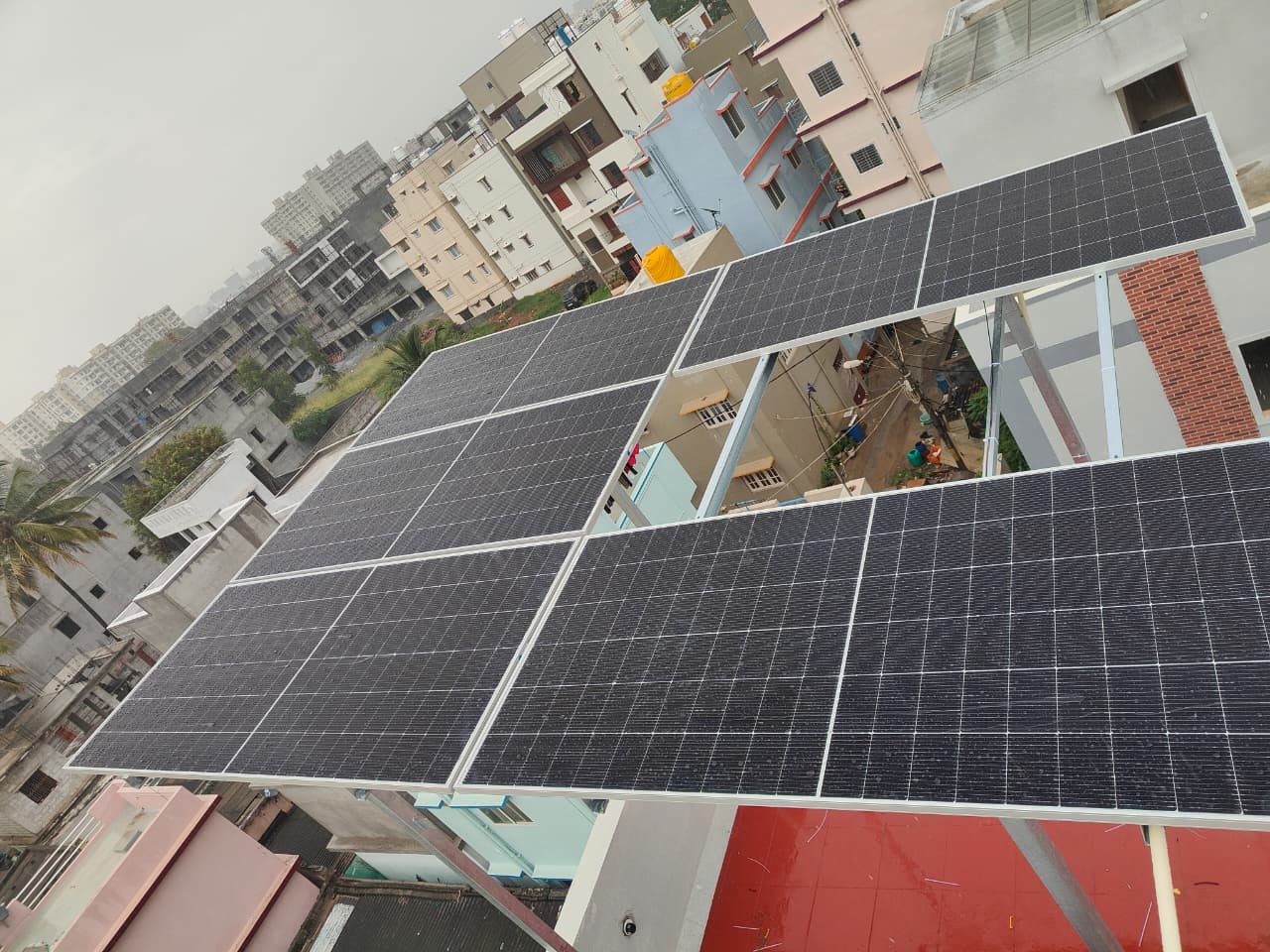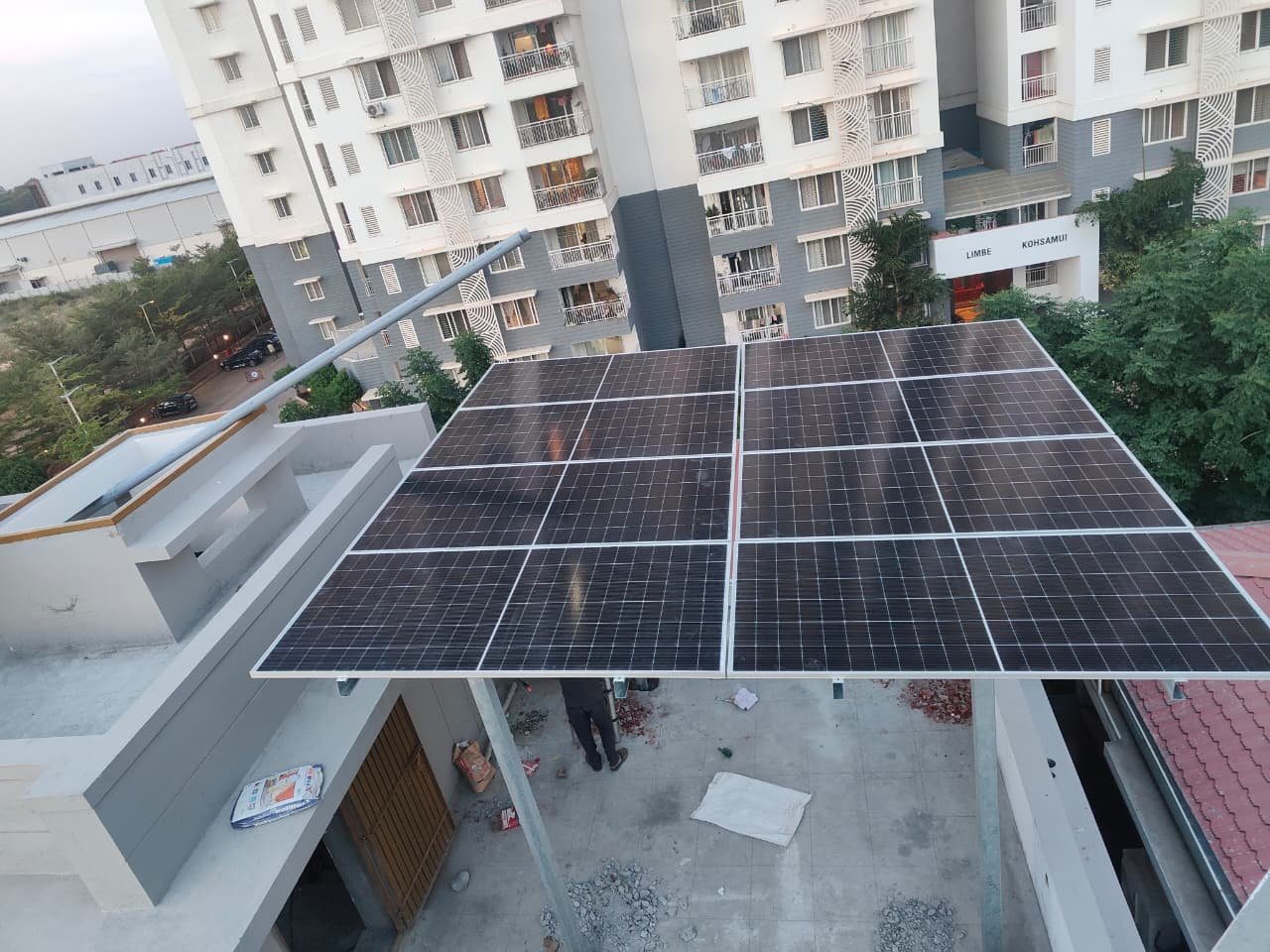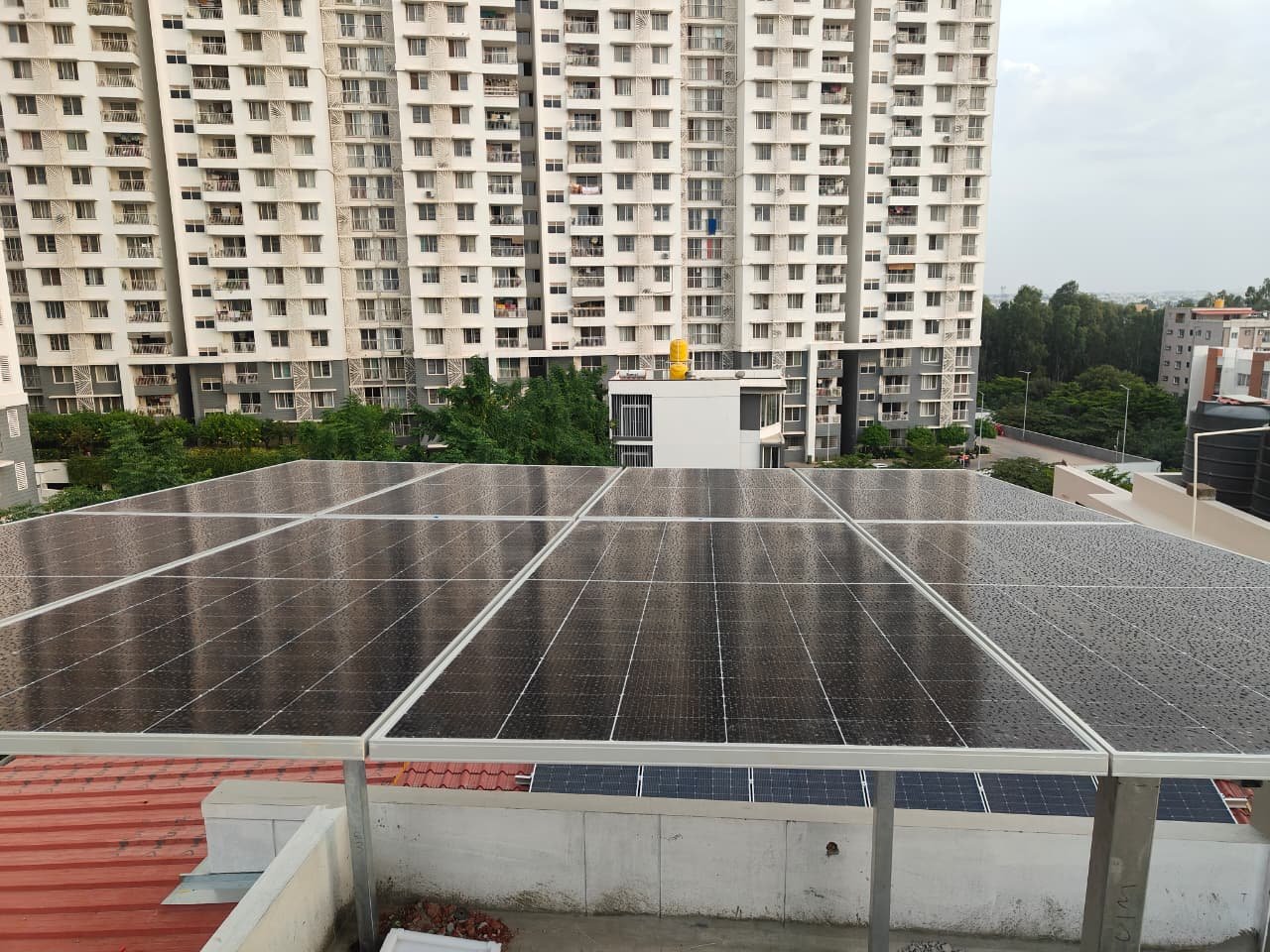
Industrial electricity bills are one of the largest recurring costs in a factory. Industrial solar panel installation lets a manufacturing unit, warehouse or processing plant generate part of its own power from rooftops or unused land, reducing the units it buys from the grid.
Industrial solar panel installation is the design and setup of a large-scale solar PV system at a factory, warehouse or industrial campus to supply part of its daytime electricity demand.
It differs from smaller installations in four ways:
Industrial tariffs include energy charges, demand charges and other components. Because solar generates during the day, it often overlaps with peak production hours, which is when plants draw the most power.
Aditya Green Energies is a solar EPC company based in Bangalore, Karnataka. We handle industrial solar projects end to end: load study, site survey, design, approvals support, procurement, installation, commissioning and ongoing support. Every system is designed around your plant's load profile, shift pattern and roof or land conditions.
Solar also gives manufacturers:
Solar units offset grid units during production hours.
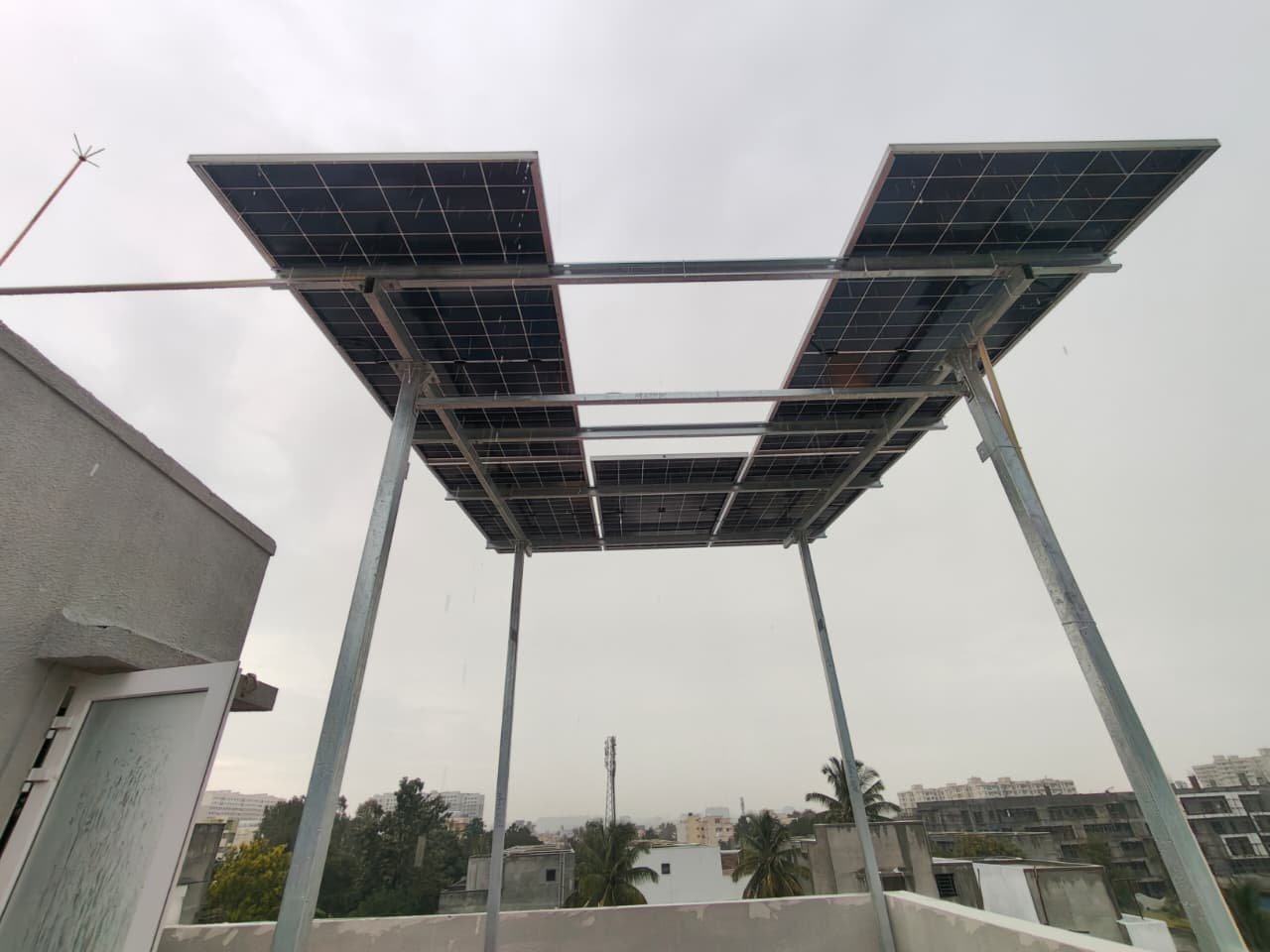
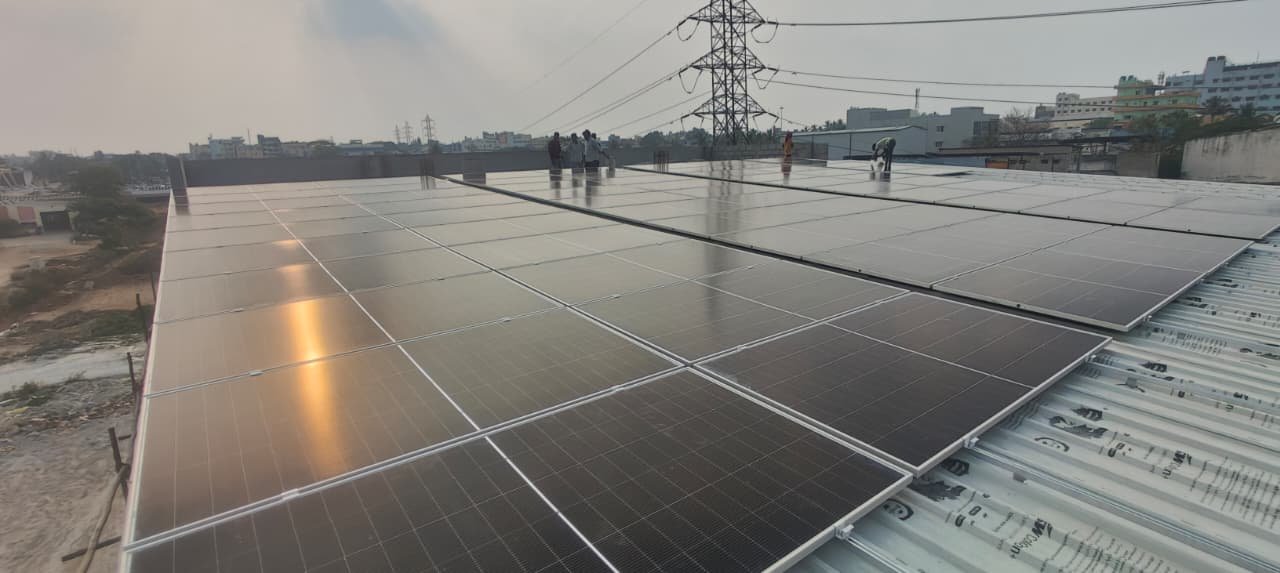
Factory roofs, warehouse roofs, parking sheds and unused land can generate power.
Solar modules are commonly backed by performance warranties of 25 years or more, although terms vary by manufacturer.
Compared with generator-based power, solar has minimal mechanical wear.
Renewable generation can support carbon-reduction and ESG disclosures.
Real-time monitoring helps plant managers spot inefficiencies.
Savings depend on: system capacity, monthly consumption, applicable tariff, solar irradiation, usable roof or land area, shading, system efficiency, operating hours, grid regulations and net-metering rules. We do not quote savings without studying your bills and site.
Solar runs alongside the grid; surplus may be exported as per rules. No batteries.
Plants with strong daytime load
Shuts down during a grid outage for safety (anti-islanding); it does not give backup by itself
Solar charges batteries and supplies loads independently
Remote units with no reliable grid
Battery cost and maintenance; sizing is more demanding
Combines solar, grid and batteries
Plants with critical loads needing backup
Higher upfront cost than on-grid
Rooftop vs ground-mounted: Rooftop suits plants with large, structurally sound roofs (RCC or metal sheet). Ground-mounted suits campuses with spare land, or plants whose roof area cannot meet the required capacity.
Convert sunlight into DC electricity. Module type is chosen for efficiency, warranty and site conditions.
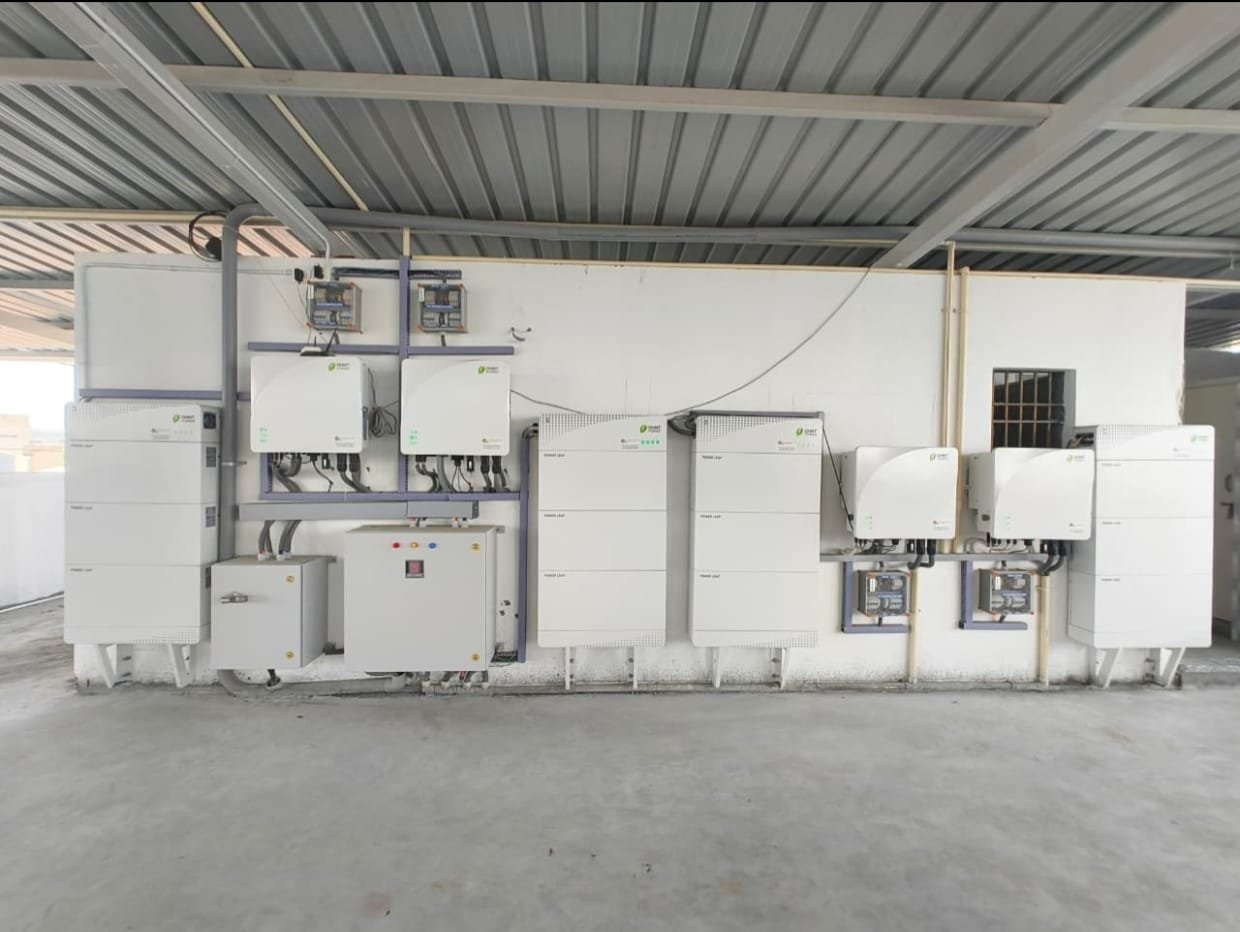
Convert DC to AC power matching your plant's supply. Industrial plants commonly use string or central inverters depending on size.
Hold modules at the right tilt. They must withstand wind load and suit the roof type.
Carry power from modules to inverters and into your panel. Correct sizing limits losses.
Surge protection, fuses, circuit breakers and isolators protect equipment and people.
Connect the solar plant to your main distribution and measure generation.
Tracks output, faults and performance remotely.
Essential for safety on large, exposed installations.
Store energy for backup or night-time use.
We understand your goals, shift patterns and expansion plans.
We review 12 months of bills, sanctioned load, contract demand and tariff category.
Engineers inspect roof, land, electrical room and connection point.
We check roof condition, load-bearing capacity, roof sheeting type and access routes.
Chimneys, tanks, neighbouring buildings and trees are assessed for shading.
Capacity is matched to daytime load and available area.
Layout, string design, protection scheme and single-line diagram are prepared.
You receive an itemised, transparent quotation with scope and assumptions.
We support DISCOM and other documentation required for grid-connected systems.
Components are sourced to the agreed specification.
Structures, modules, cabling and inverters are installed with plant safety protocols.
The system is connected to your distribution with proper protection.
Insulation, polarity, earthing, synchronisation and performance checks.
Remote dashboard is configured for your team.
Documentation, drawings and operating guidance are shared.
Maintenance and performance support continue after handover.
Sizing balances three things: how much daytime power you use, how much area you have, and how much of your load you want solar to cover.
Key inputs include:
As a general rule of thumb, 1 kW of rooftop solar commonly needs around 80–100 sq ft of shadow-free space, depending on module type and layout. A site survey gives the real number.
We do not publish fixed prices because no two plants are the same. Cost depends on:
Return on investment is calculated by comparing project cost against the grid units solar replaces over time, plus applicable benefits and maintenance costs. Payback varies widely between plants, so we model it using your own bills and operating hours.
Technical documentation, design drawings and coordination support for grid connection.
Grid-connected systems in Bengaluru need permission from the relevant DISCOM, and rules for net metering, capacity limits and export terms are set by the Karnataka regulator and may change.
Some industrial consumers may benefit from tax provisions such as depreciation, or from open access or captive models for larger capacities. Eligibility depends on your entity, capacity and current rules, so please confirm with your chartered accountant and the DISCOM.
We explain the current approval route during your site assessment rather than assuming one.
Industrial plants are often dusty, so cleaning schedules matter. A typical O&M plan includes:
| Industry | Why solar fits | Typical considerations |
|---|---|---|
| Manufacturing | Daytime machine loads align with solar output | Motor starting loads, power quality |
| Textile | Long running hours and steady loads | Humidity, lint and dust affecting cleaning |
| Food processing | Cooling, refrigeration and processing loads | Cold-chain continuity needs backup planning |
| Warehouses | Large, uncluttered roofs | Roof load capacity, lighting and dock loads |
| Logistics | Sorting, lighting and charging loads | EV and forklift charging integration |
| Engineering units | CNC, welding and fabrication loads | Sensitive equipment and voltage stability |
| Automotive | Assembly and paint-shop loads | Large connected loads, multiple shifts |
| Pharmaceutical | HVAC and clean-room loads | Strict power reliability; hybrid may be considered |
| Other industries | Plastics, packaging, cold storage, printing | Assessed case by case |
Industrial solar involves high-voltage DC, large AC loads and working at height. Poor design can cause underperformance, fire risk, roof damage or downtime. Engineering-led design, quality components, proper earthing and tested commissioning protect both your plant and your investment.
Factories, manufacturing units, warehouses, cold storage facilities, logistics hubs, workshops, processing plants and industrial estates across Bangalore and wider Karnataka.