Schools and colleges have large roofs, predictable daytime schedules and a mission that fits naturally with clean energy. Educational solar panel installation helps institutions reduce the electricity they buy, plan budgets with more confidence and give students a working example of renewable energy.
Educational
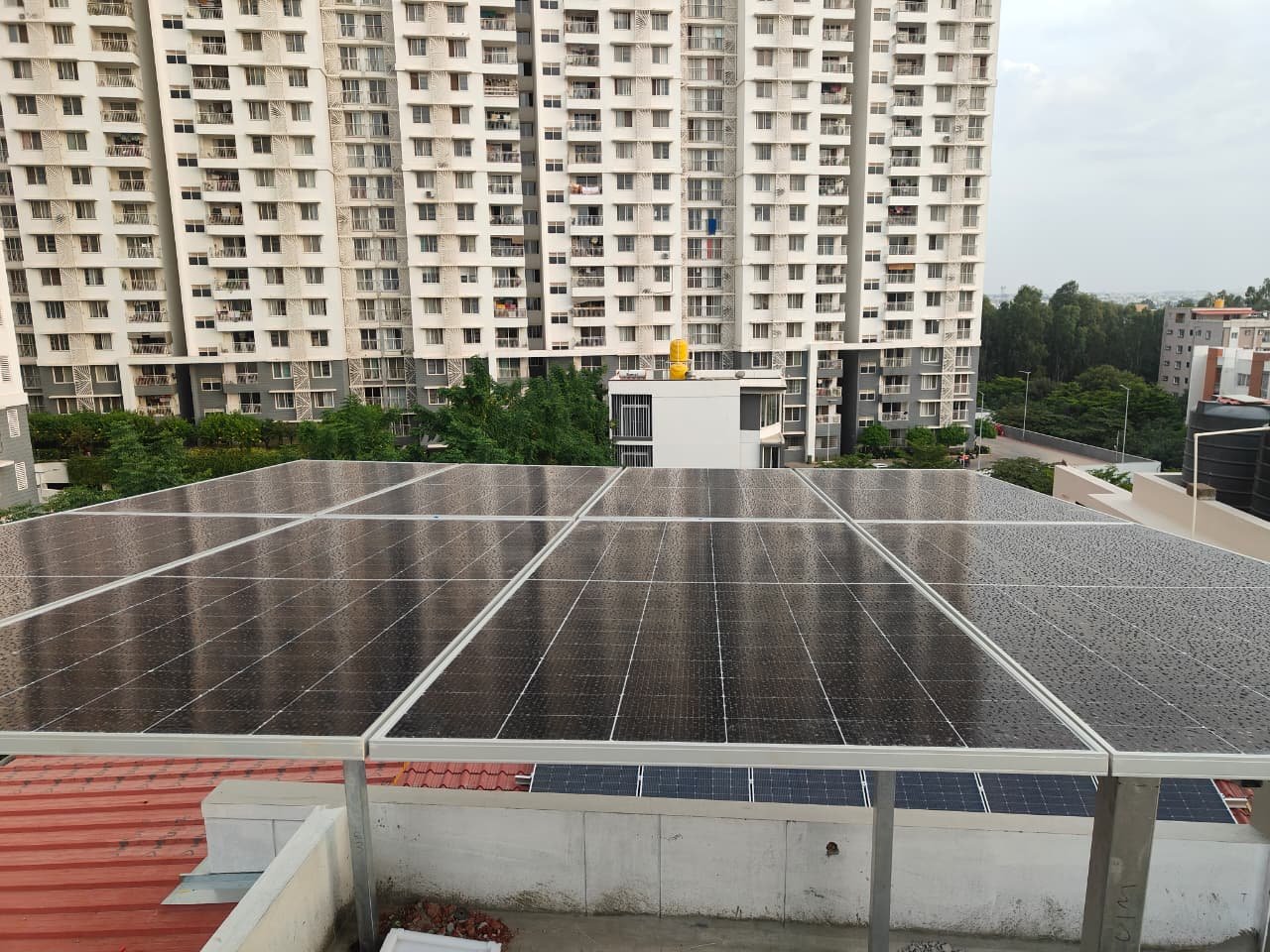
It is the design and installation of solar PV systems on school, college, university or training-campus buildings to supply part of their electricity needs. Systems typically sit on classroom blocks, laboratories, auditoriums, hostels, sports halls or parking sheds, and connect to the campus electrical network.
Aditya Green Energies is a solar EPC company in Bangalore, Karnataka. We work with institution managements to assess campuses, design systems around academic calendars and install solar with student safety and minimal disruption in mind.
Request a Solar Site Assessment
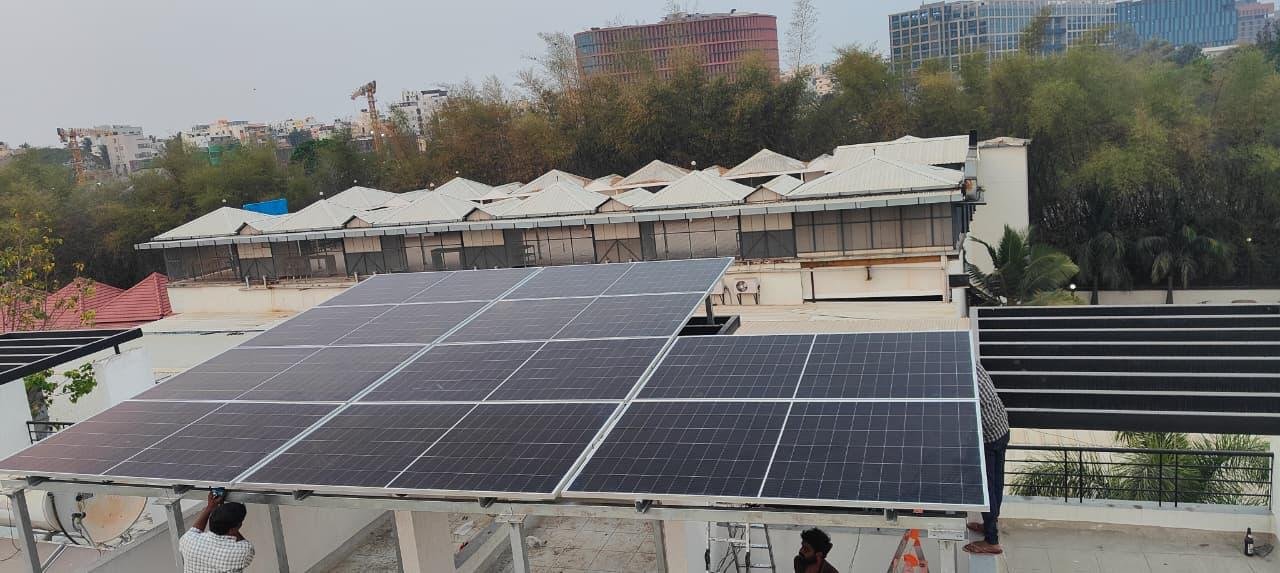
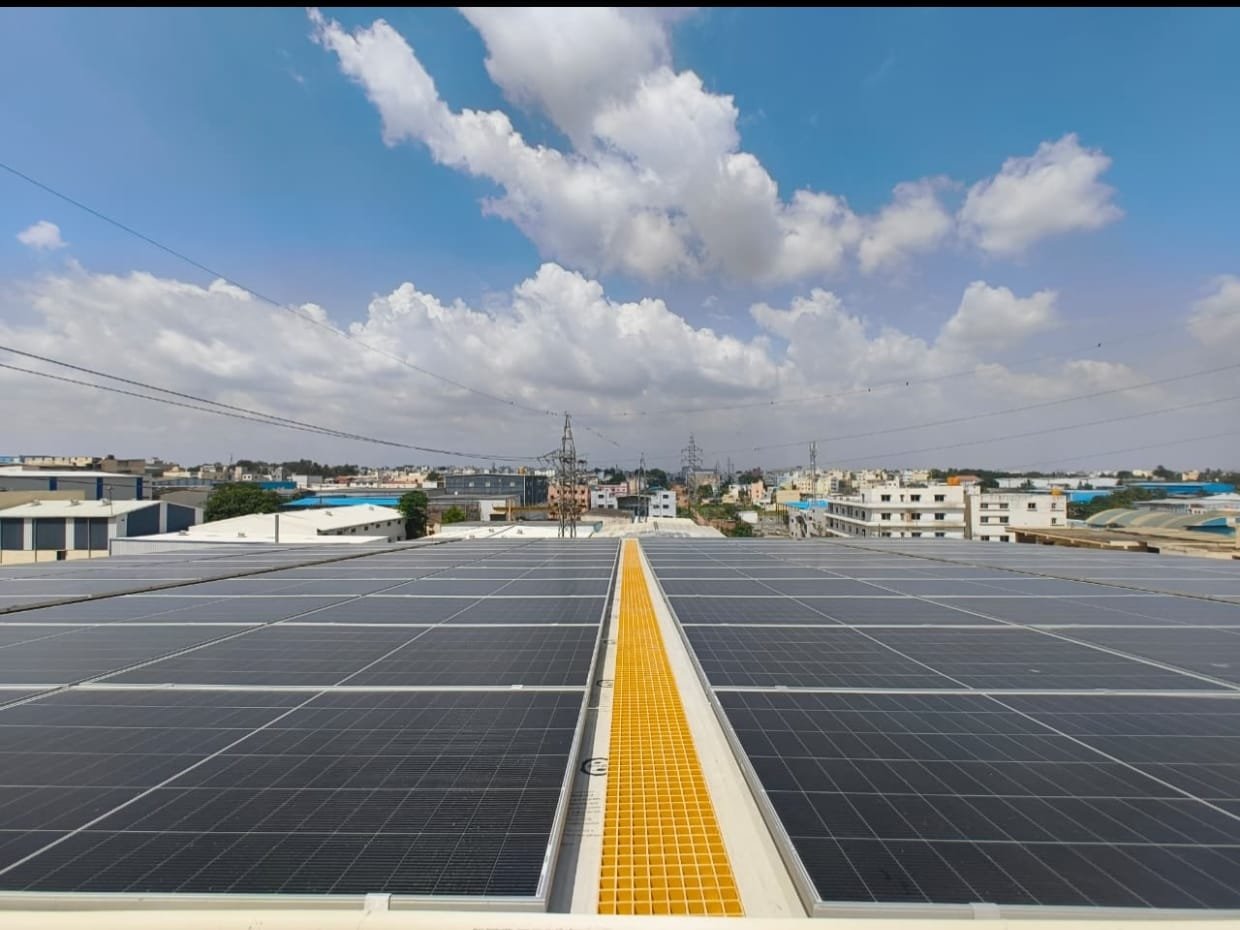
An important difference: Campuses generate solar power during holidays and vacations, when consumption is low. This is why system sizing and net-metering terms need careful planning.
On the units solar replaces, freeing budget for teaching and facilities.
For trustees and finance committees.
Supports sustainability commitments and community perception.
Monitoring data can feed science, mathematics and environmental projects.
Of campus operations.
Start with one block and expand in phases.
Actual savings depend on: system capacity, consumption, tariff category, solar irradiation, roof area, shading, system efficiency, operating hours and holidays, grid regulations and net-metering rules.
| Campus area | Energy pattern | Solar considerations |
|---|---|---|
| Classrooms and administrative blocks | Lighting, fans, computers, AC in offices | Strong daytime match |
| Laboratories and computer centres | Sensitive equipment and steady loads | Power quality and UPS coordination |
| Libraries and auditoriums | Lighting and AC during events | Variable usage; sized conservatively |
| Hostels | Morning and evening peaks, hot water, night lighting | Hybrid or solar water heating may complement PV |
| Canteens and kitchens | Cooking, refrigeration, exhaust | Combination of daytime and evening loads |
| Sports halls and parking sheds | Lighting and open roof space | Solar carports or shed-mounted systems |
| Workshops and training centres | Machine loads | Engineering review for motor loads |
Solar works with the grid; no batteries
Lower cost, minimal upkeep
Does not run during a grid outage
Most schools and colleges with daytime load
Solar, grid and batteries
Backup for selected circuits
Higher cost and battery upkeep
Hostels, labs, server rooms, medical rooms
Independent solar with batteries
Works without a grid
Higher cost, careful sizing
Remote or rural institutions
An on-grid system does not automatically provide backup during power cuts. If you need continuity for labs, IT rooms or hostels, we plan backup circuits separately.
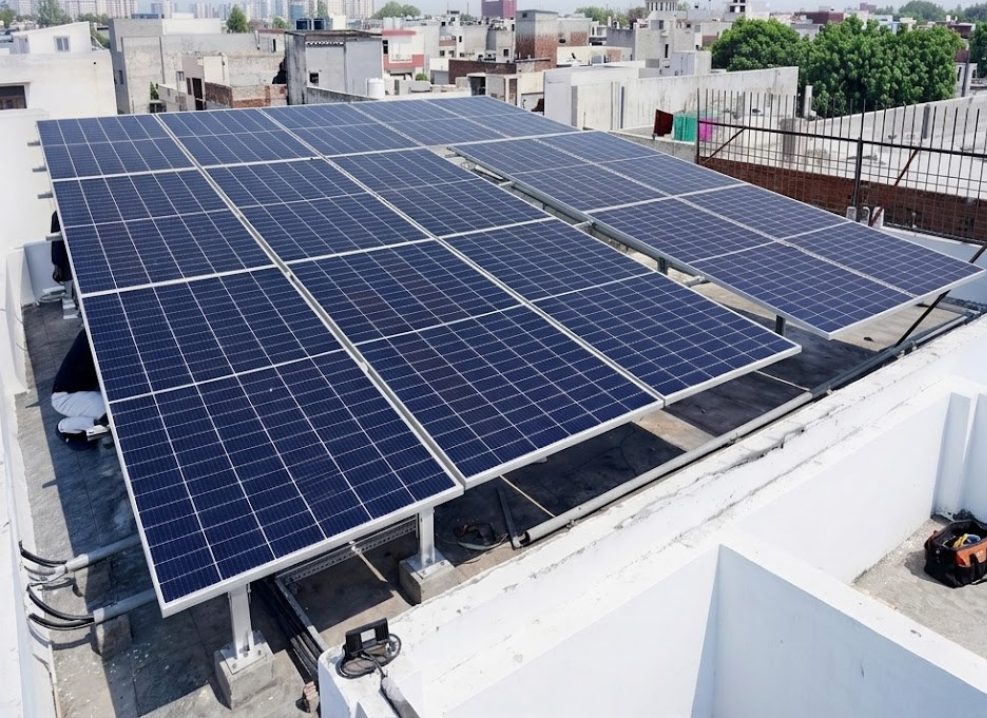
Convert sunlight to electricity.
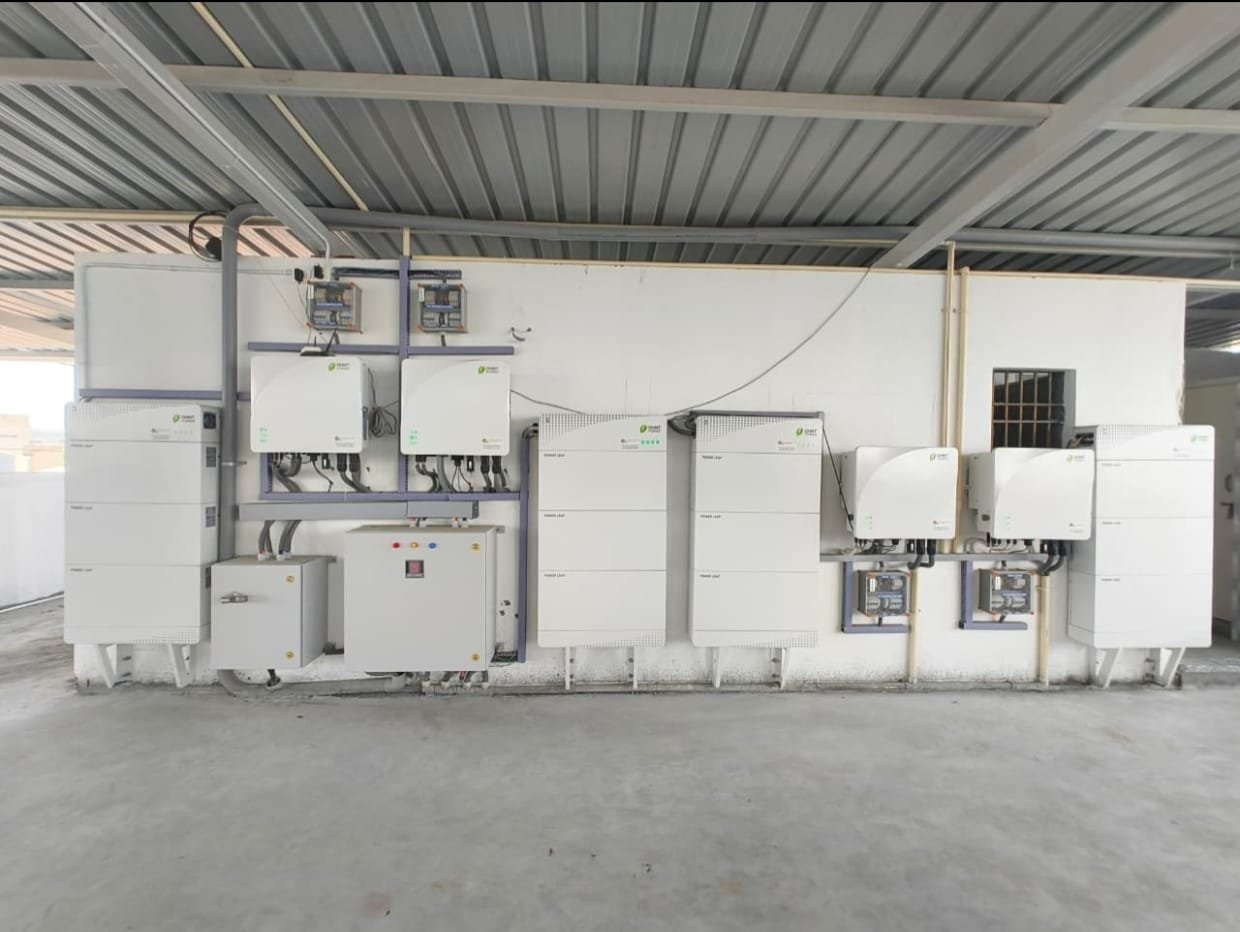
Change DC electricity to usable AC power.
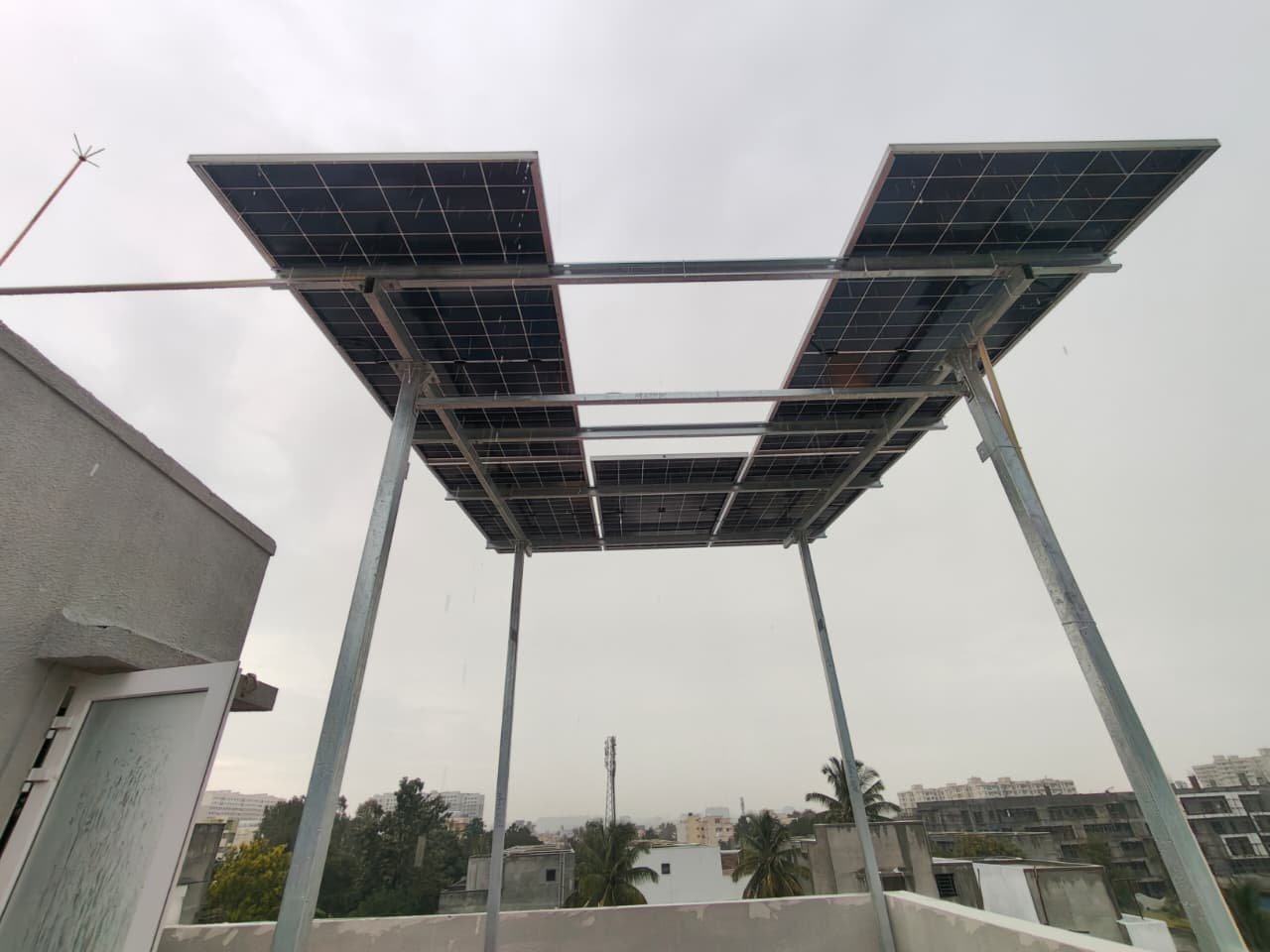
Hold panels securely; designed for campus roof types and wind loads.
Move power safely and protect equipment.
Connect solar to campus distribution and record generation.
Displays live and historic generation, and can be shown on a lobby screen for students.
Essential for exposed rooftops.
Provide backup for selected loads.
We meet management and facility staff to understand priorities and budget.
Includes holiday and exam-season patterns.
Identifies waste and sizing opportunities.
Every building block's roof and electrical room are inspected.
Particularly important for older buildings.
Trees, water tanks, adjacent blocks and playground structures.
Capacity per building and a staged roadmap.
Layouts, safety zones and student-access restrictions.
Itemised, with options for phases.
Documentation support for the DISCOM and campus authorities.
Components sourced to the agreed specification.
Heavy work during vacations where possible.
With optional educational display
For the maintenance team
As a rough guide, 1 kW of rooftop solar commonly needs 80–100 sq ft of shadow-free area. We recommend a capacity that suits your actual load and holidays, not simply the maximum your roof can hold.
Cost depends on system capacity, panel and inverter type, roof type and condition, structure design, cable routes between blocks, electrical upgrades, battery requirement, installation complexity, approvals, monitoring and O&M. We provide an itemised quotation after a site survey, with phase-wise options so management can spread the investment.
ROI is estimated by comparing project cost with the grid units replaced over time, maintenance costs and any applicable benefits. Institutions with strong daytime use and sound roofs generally have better outcomes. Payback differs by campus.
Institutions often explore:
Eligibility for incentives and tax treatment depends on whether the institution is a trust, society, company or government body. Please confirm with your accountant or advisor.
Design, documentation and coordination support.
Grid-connected systems need DISCOM approval. Net-metering terms, tariff category and capacity limits are set by the Karnataka regulator and may change.
This depends on the institution type and prevailing rules. We help you check.
If the premises are leased or run by a trust, ownership consent should be documented.
Rooftop access is restricted, work areas are cordoned off, cables are routed away from play areas and earthing is tested at commissioning.
Periodic cleaning, inspection of wiring and structures, inverter checks and monitoring review. Tree growth and new construction should be checked for shading.
A dashboard can show daily generation to staff and, optionally, students.
A working solar plant can support:
Campuses combine children, staff, visitors and sensitive equipment. A professional installer plans around academic schedules, secures work zones, designs for safety and tests the system before handover. Poor workmanship can cause leaks, electrical faults or underperformance.
Schools, junior colleges, degree and engineering colleges, universities, training campuses, hostels, residential schools, institutional buildings and learning centres.