Residential Solar Panel Installation in Bangalore

If your home's electricity bill keeps climbing, rooftop solar lets you generate part of your own power from space that is otherwise unused. Residential solar panel installation places solar modules on your terrace or roof, connects them to your electrical system and, in most cases, to the grid.

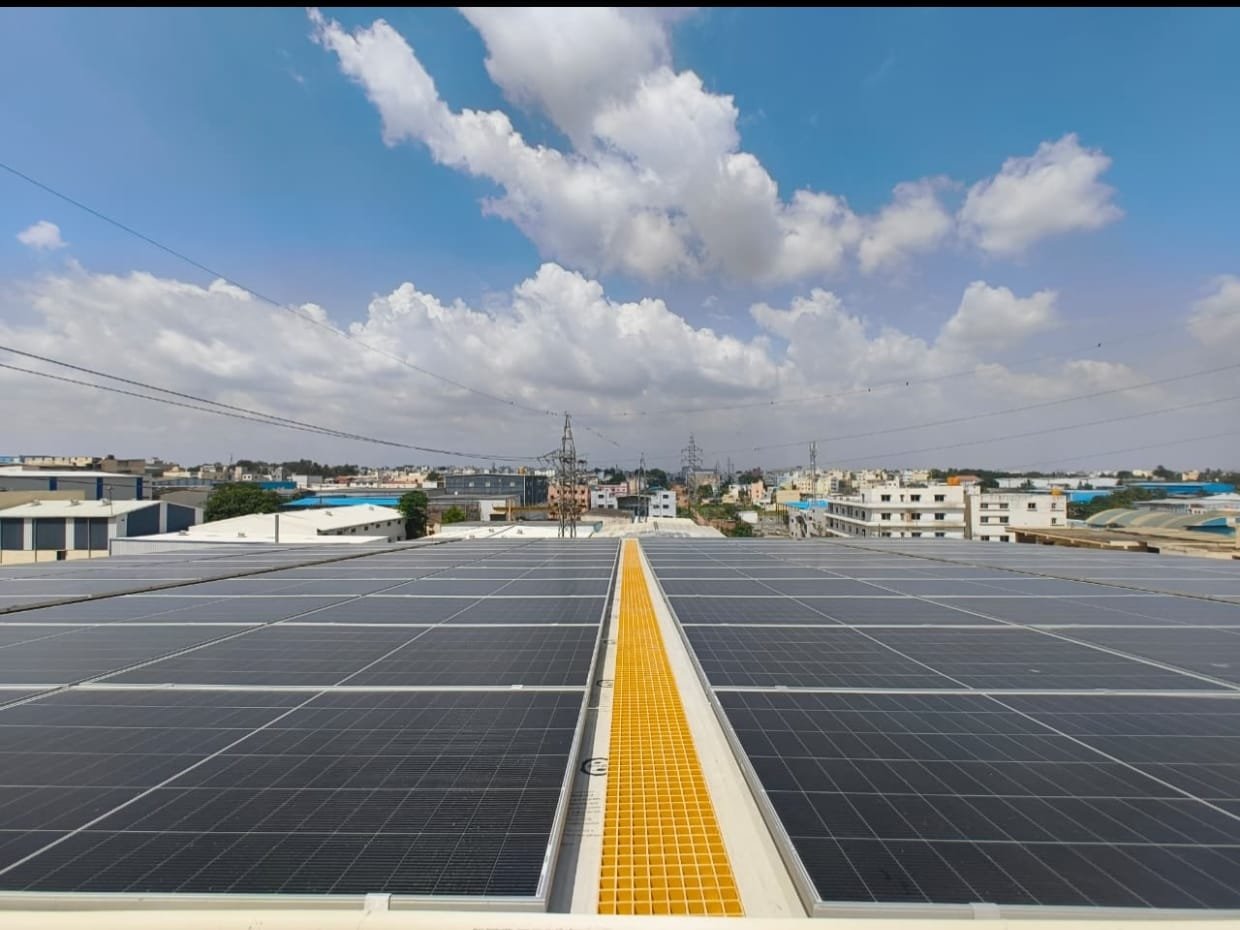
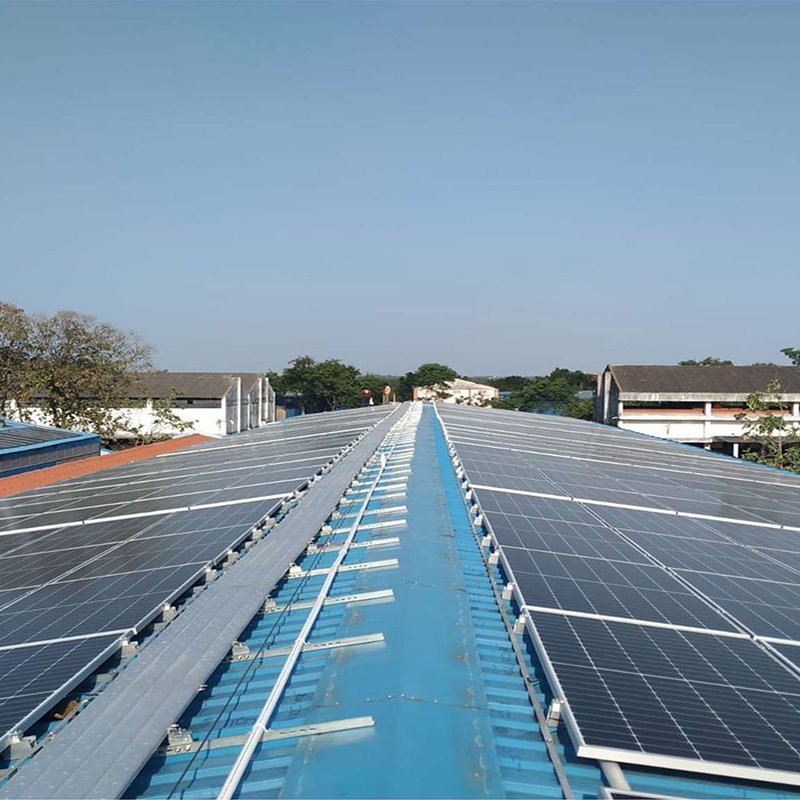
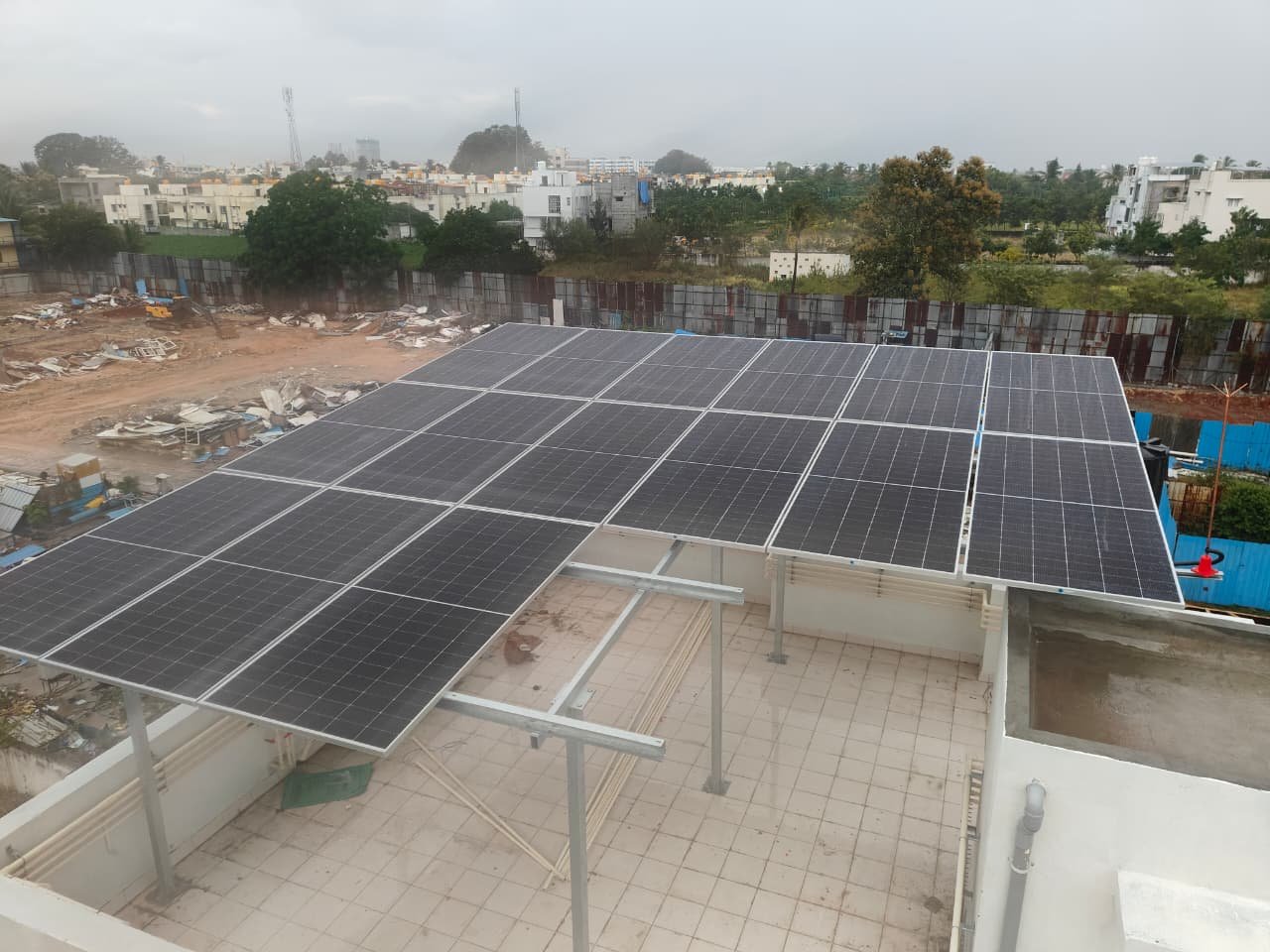
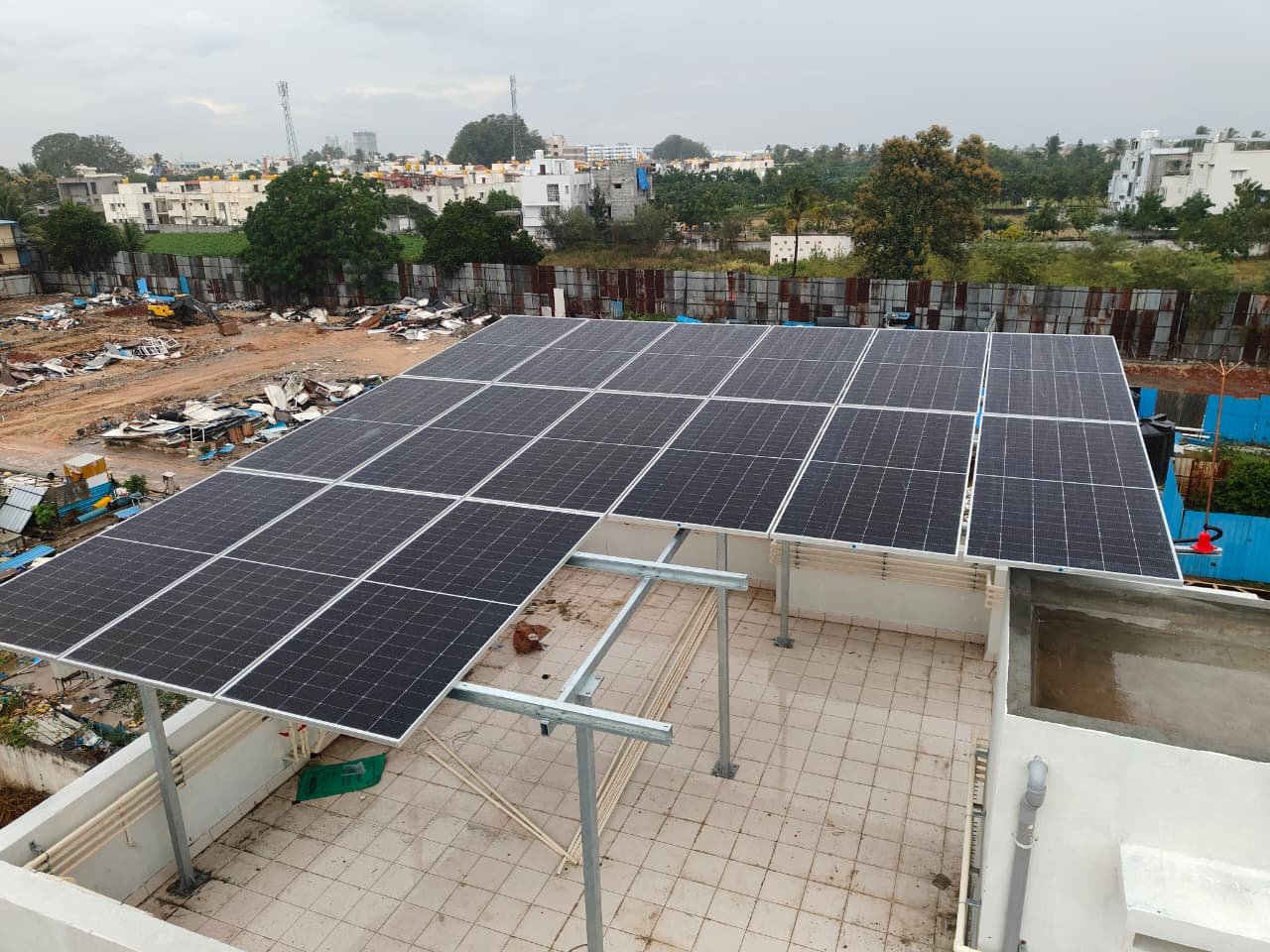
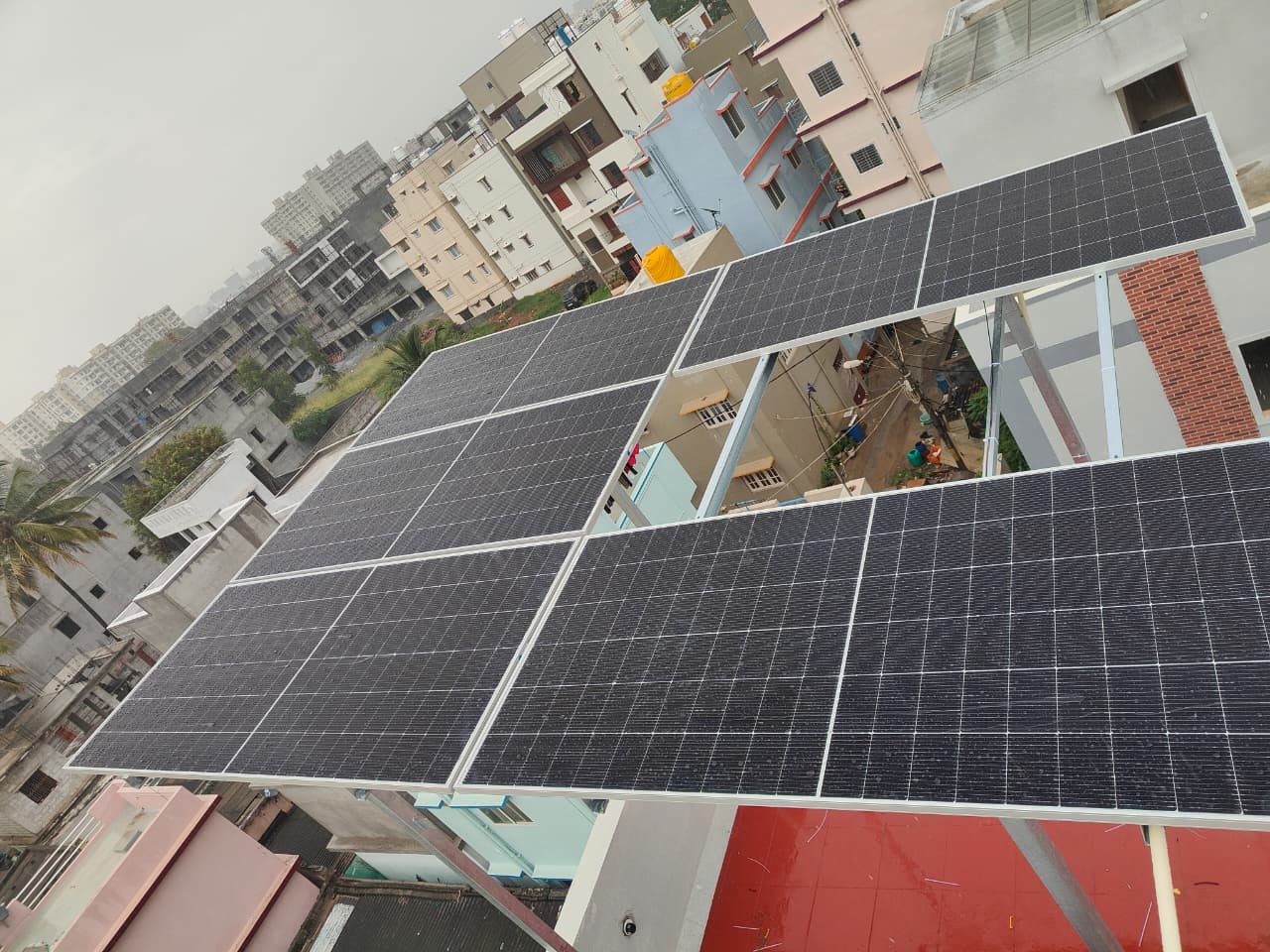
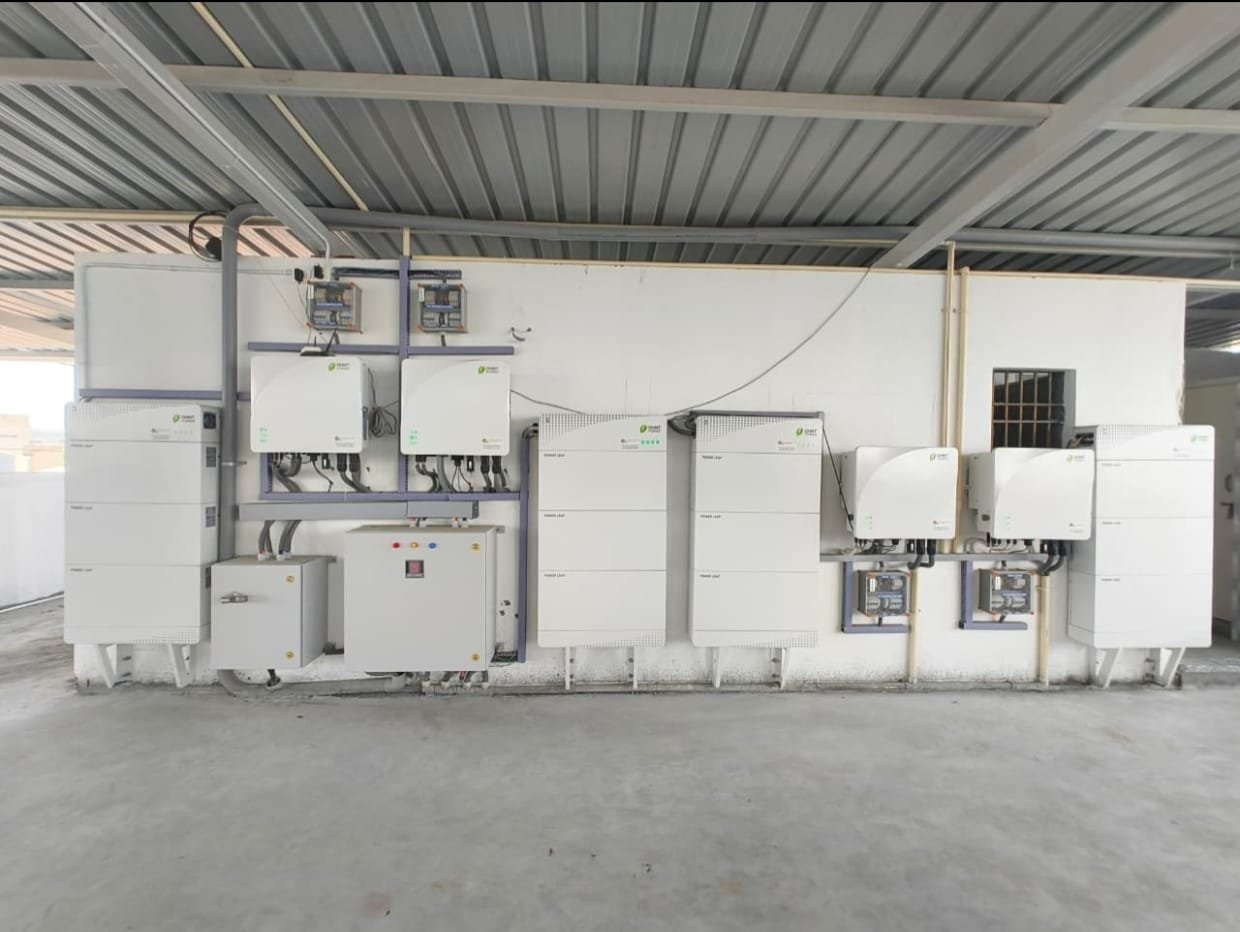
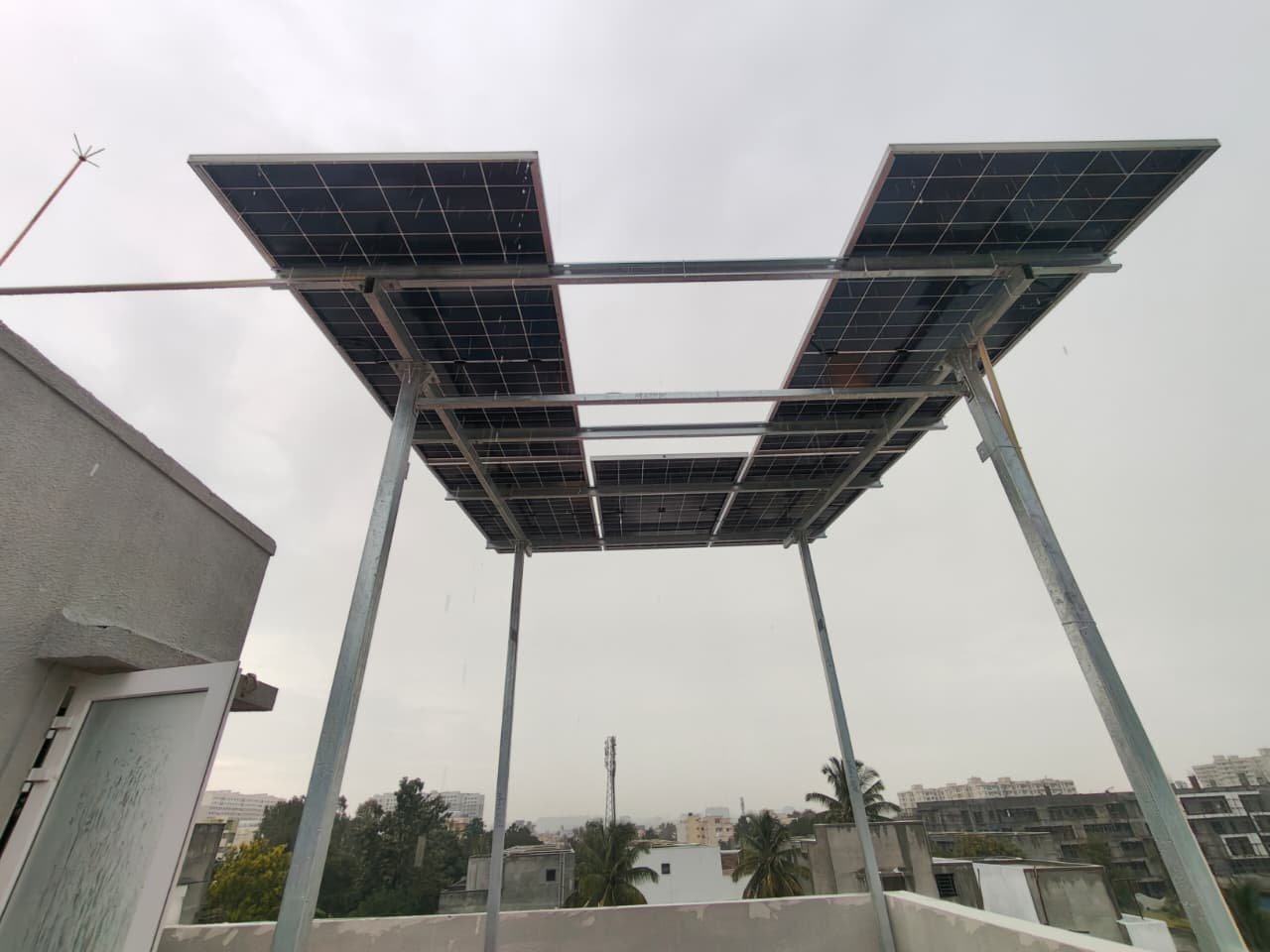
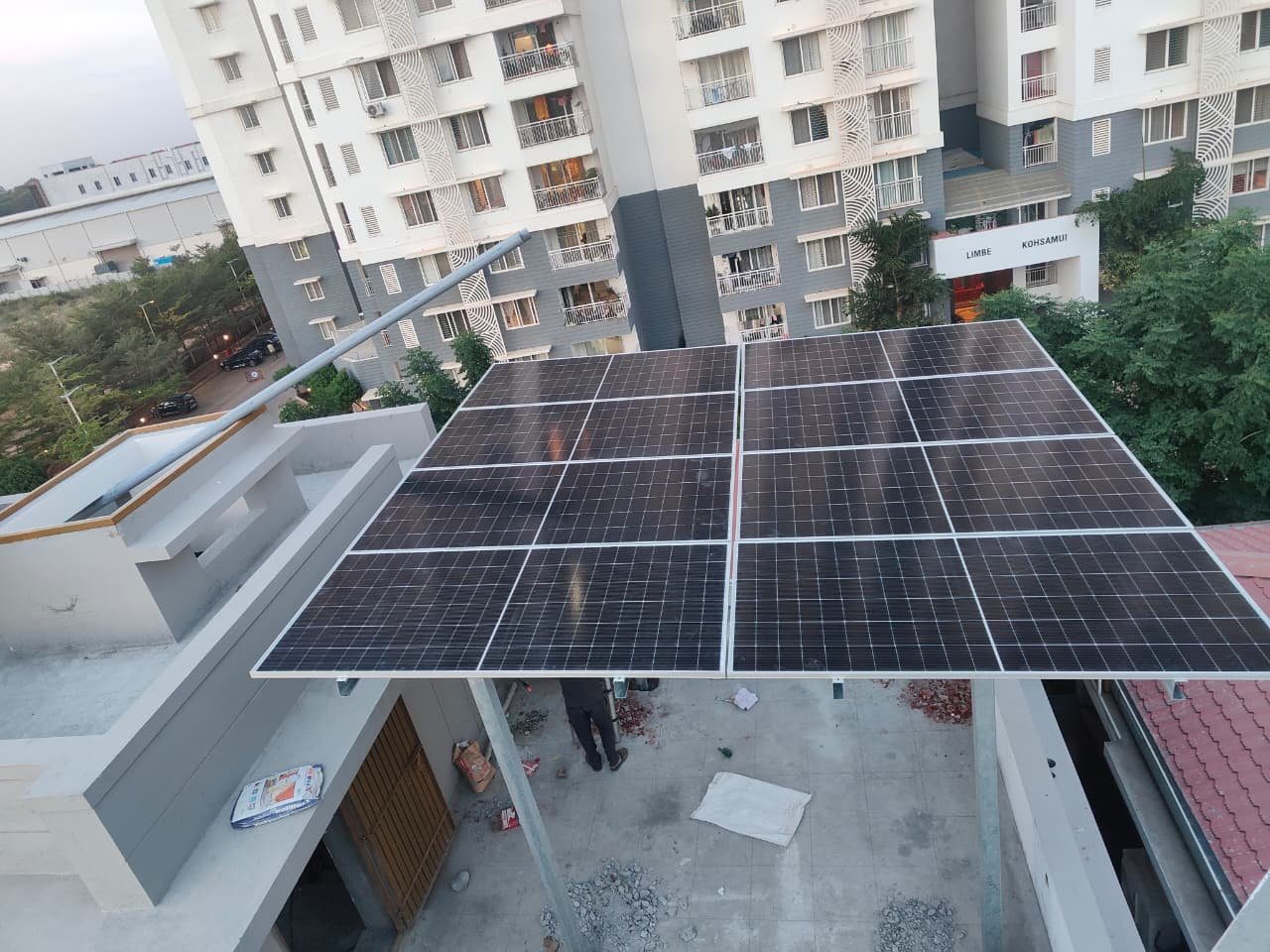
Solar installation by Aditya Green Energies
Rooftop Solar for Homes, Villas and Residential Communities

What Is Residential Solar Panel Installation?

Residential solar panel installation is the process of fitting a rooftop solar power system at a home so that it generates electricity for household use. During daylight, the solar power runs your appliances first, and the grid supplies whatever else you need. With net metering, surplus power may be exported to the grid, subject to applicable rules.

Aditya Green Energies designs and installs rooftop solar for independent houses, villas and residential communities in Bangalore. We start with your electricity bills and your roof, then recommend a system that fits your usage, budget and safety needs.

Get a Custom Solar Quote
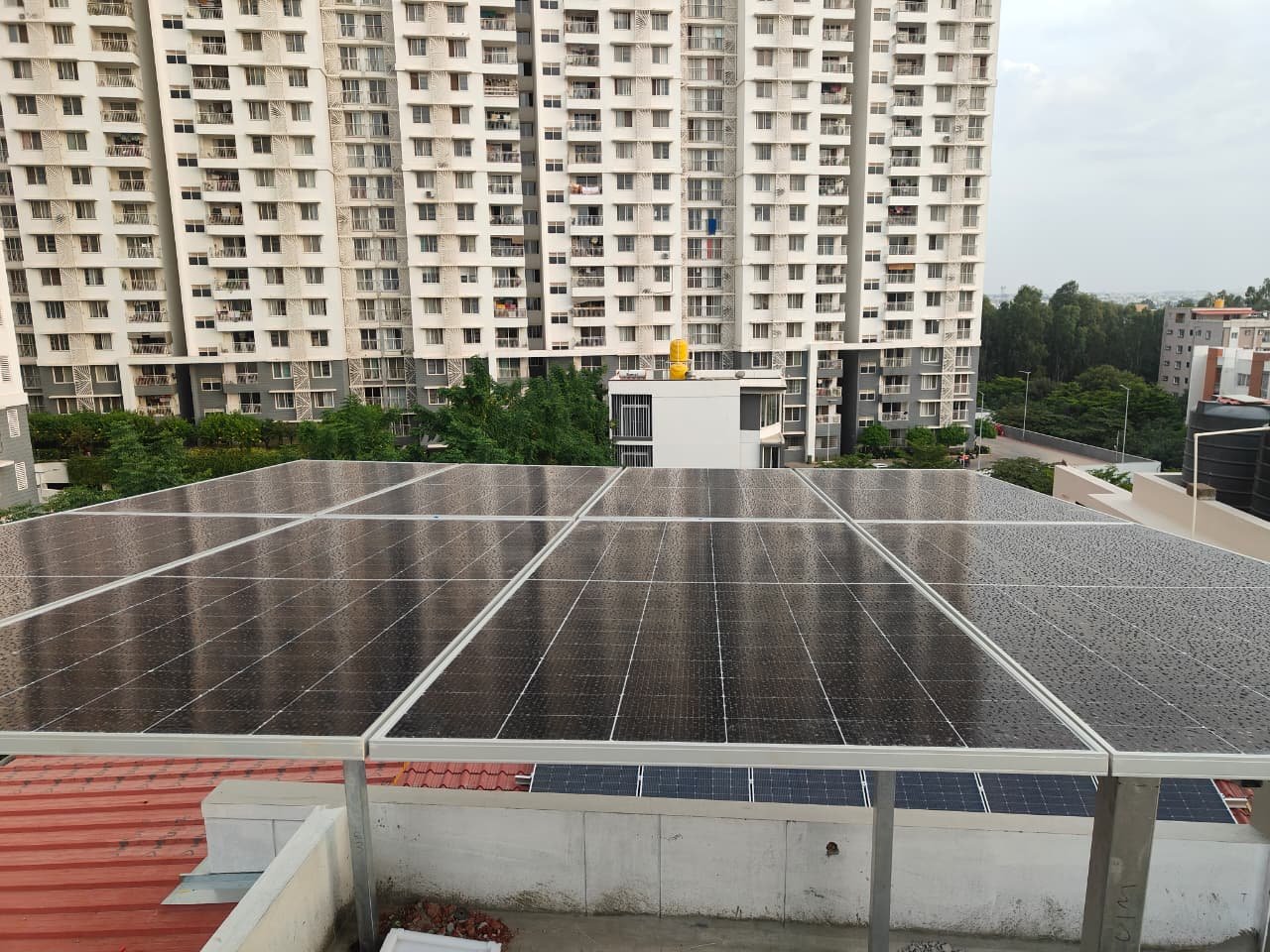
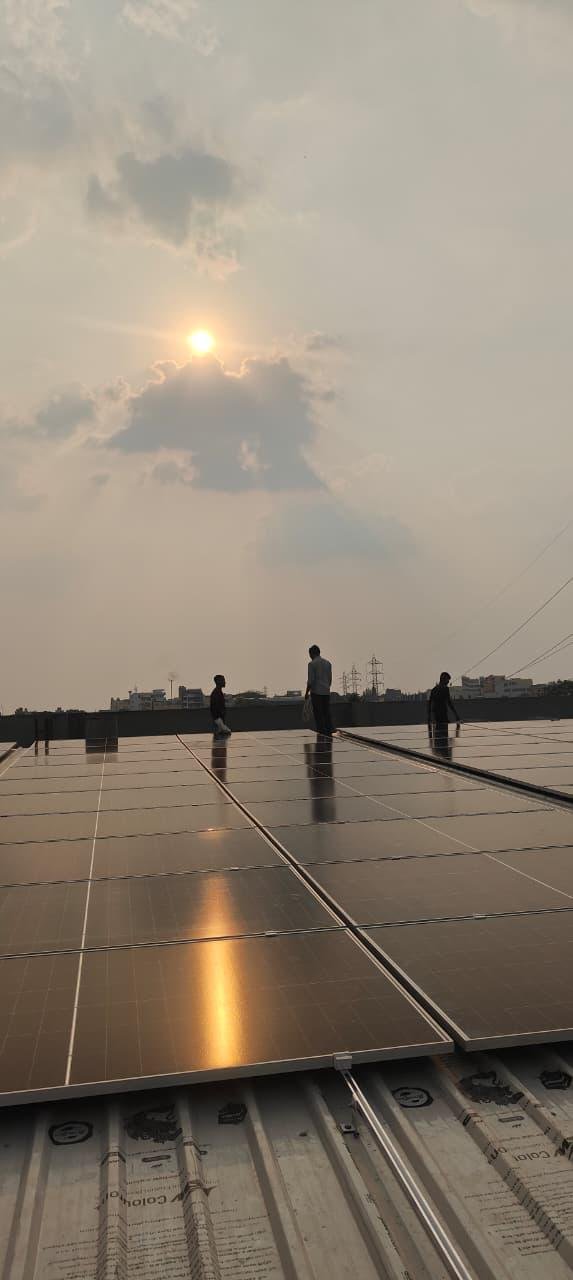
Homes in Bangalore

Why Solar Makes Sense for Homes in Bangalore

Bangalore receives good sunlight through much of the year, and many homes have usable terrace space. Solar can help households:

  • Reduce the units they buy from the electricity supplier
  • Plan their long-term power costs with more confidence
  • Run daytime loads such as fans, refrigerators, pumps and work-from-home equipment on clean energy
  • Lower their household carbon footprint

Households with higher daytime use, such as work-from-home families or homes with water pumps and air conditioners, usually benefit more.

Solar installation by Aditya Green Energies
Why It Matters

Key Benefits of Home Solar Installation

Lower electricity bills

Solar units reduce what you draw from the grid.

Use of free roof space

Terraces become income-saving assets.

Low day-to-day effort

Once installed, a system needs only periodic cleaning and checks.

Long equipment life

Modules commonly carry performance warranties of around 25 years, though terms vary by brand.

Possible government support

Eligible households may qualify for central assistance under PM Surya Ghar (see below).

Backup option

A hybrid system with batteries can keep selected appliances running during outages.

Your actual savings depend on system capacity, household consumption, tariff slab, sunlight, roof area, shading, system efficiency, your usage hours and net-metering rules.

Options To Consider

Types of Residential Solar Systems

On-grid
How it works

Solar works with the grid; no batteries; surplus may be exported

Advantages

Lowest cost, simple, low maintenance

Limitations

Does not supply power during a grid outage

Best for

Homes with reliable grid and daytime usage

Off-grid
How it works

Solar charges batteries; no grid connection

Advantages

Independent from the grid

Limitations

Higher cost, battery replacement, careful sizing

Best for

Remote houses, farmhouses

Hybrid
How it works

Solar, batteries and grid together

Advantages

Backup power plus savings

Limitations

Higher upfront cost than on-grid

Best for

Homes facing frequent outages or needing critical backup

Important: An on-grid system does not automatically power your home during a blackout. It switches off for safety when the grid goes down.

What's In The System

Components of a Home Solar System

  • Solar panels

    Convert sunlight into DC electricity.

  • Solar inverter

    Converts DC to AC power your home can use and manages grid connection.

  • Mounting structures

    Hold panels firmly at the right angle and withstand wind.

  • DC/AC cables

    Carry power safely; quality and sizing reduce losses.

  • Protection devices

    Breakers, surge protection and isolators guard against faults.

  • Distribution panel and meter

    Connect solar to your home wiring and measure generation or export.

  • Monitoring

    Lets you see daily generation from a phone or computer.

  • Batteries (hybrid/off-grid only)

    Store energy for backup.

  • Earthing and lightning protection

    Critical for safety.

How It Works

How Residential Solar Installation Works

1
Initial consultation

We discuss your goals, budget and expectations.

2
Electricity bill analysis

We study 6–12 months of bills and sanctioned load.

3
Site survey

Our team visits your home to inspect the terrace and electrical setup.

4
Roof assessment

We check roof type, strength, waterproofing and usable area.

5
Shadow analysis

Water tanks, parapets, trees and nearby buildings are assessed.

6
System sizing

We recommend a capacity suited to your usage and roof.

7
Design

Panel layout and electrical design are prepared.

8
Quotation

You receive a clear, itemised proposal.

9
Approvals and subsidy paperwork

We help with documentation for the electricity supplier and, where you are eligible, the subsidy application process.

10
Procurement and installation

Structures, panels, inverter and wiring are installed.

11
Commissioning

Safety tests and performance checks are carried out.

12
Meter and grid connection

Completed as per the supplier's procedure.

13
Monitoring setup and handover

You learn how to read your system's output.

14
After-sales support

Service and maintenance guidance continue after handover.

Indicative Sizing

How Many Solar Panels Does a Home Need?

It depends on how much electricity you use. As a general rule of thumb:

  • 1 kW of rooftop solar commonly generates around 3.5–5 units (kWh) per day in Indian conditions, depending on site and season.
  • 1 kW typically needs around 80–100 sq ft of shadow-free roof.
  • Modern panels are often 500 W or more each, so a 3 kW system may use roughly 6–7 panels, depending on the model.
Approximate monthly usage Indicative size to evaluate*
Lower household usage 1–2 kW
Medium household usage 3 kW
Higher usage (AC, EV, pumps) 4–5 kW or more

*Indicative only. We confirm the right size after studying your bills and roof.

Cost & ROI

What Determines the Cost of Home Solar?

We avoid quoting a single price because homes differ. Cost depends on:

  • System capacity
  • Panel type and brand
  • Inverter type
  • Mounting structure and roof type (RCC, sheet, tiled)
  • Wiring and electrical upgrades
  • Battery requirement, if any
  • Installation complexity and roof access
  • Approvals and metering
  • Monitoring and service plan

For ROI, we compare the cost against the grid units your system is expected to replace over its life. Payback differs from home to home. Request a site assessment and we will prepare a customised quotation and payback estimate.

Financial Support

Net Metering and PM Surya Ghar: What to Know

What we provide

Documentation support, system design and installation that meets technical requirements.

What the government or supplier requires

Net metering rules, capacity limits and the application process are set by the Karnataka regulator and your electricity supplier, and can change. Subsidy eligibility and the process are defined by the national scheme portal.

What you may be eligible for

Under PM Surya Ghar: Muft Bijli Yojana, eligible residential households may receive central financial assistance for rooftop solar. The amount depends on system capacity and prevailing scheme rules. We do not promise a fixed subsidy figure. We help you check eligibility and the current amount during your assessment.

Generally, applicants must own a suitable roof, have a valid electricity connection and use approved equipment as per scheme norms. Please verify current conditions on the official portal.

Care & Safety

Maintenance and Monitoring for Home Solar

  • Clean panels with water and a soft cloth or wiper when dusty, preferably in the early morning
  • Check that no shadows have appeared from new construction or growing trees
  • Monitor daily generation through the app or inverter display
  • Arrange an annual inspection of wiring, earthing and mounting
  • Keep inverter ventilation clear

Never climb onto a wet roof or clean panels while they are hot. Use safe access.

Who We Serve

Property Types We Serve

Independent houses, villas, gated communities and apartment associations (for common areas such as lifts, pumps and lighting), farmhouses and row houses.

Before You Buy

Common Mistakes Homeowners Should Avoid

  • Buying a system based on price alone without checking component details
  • Ignoring shadows from water tanks or nearby buildings
  • Assuming on-grid solar works in a power cut
  • Skipping waterproofing checks on the terrace
  • Choosing an oversized system without reviewing usage
  • Not clarifying the subsidy and metering process before signing
Recent Work

A Glimpse Of Our Installations

Solar installation by Aditya Green Energies
Quality Workmanship

Why Professional Installation Matters

A residential system sits on your roof and connects to your home wiring. Poor workmanship can cause leaks, loose structures in strong winds, electrical faults or poor generation. A professional team studies the roof, uses correct fixings and earthing, and tests the system before handover.

Why Aditya Green Energies

Why Choose Aditya Green Energies

  • Professional site assessment before quoting, so recommendations rest on your roof and bills, not guesswork
  • Engineering-led design tailored to your roof and usage
  • Transparent, itemised quotation with component specifications
  • Documentation support for net metering and subsidy applications
  • Attention to roof safety, earthing and waterproofing
  • Monitoring setup and handover guidance
  • After-sales support from a Bangalore-based team
Why choose Aditya Green Energies
Common Questions

Frequently Asked Questions

The cost depends on system size, panel and inverter brand, roof type, wiring, battery requirement and approvals. A larger system costs more in total but less per kW. Instead of a fixed price, we give an itemised quotation after a site visit, with subsidy eligibility checked separately.

It depends on your monthly consumption and available roof space. As a guide, a 3 kW system may use roughly 6–7 panels of around 500 W each. We study your bills, then recommend a capacity that fits your usage without oversizing.

In Indian conditions, 1 kW commonly generates around 3.5–5 units per day, depending on season, shading, panel orientation and system quality. Monsoon months usually produce less. Your installer should estimate generation for your specific roof.

Eligibility is defined by the scheme and generally covers residential households with a valid electricity connection and a suitable roof of their own, installing approved equipment through the prescribed process. Conditions can change, so verify on the official portal. We help you check eligibility during assessment.

The subsidy depends on your system capacity and the scheme rules at the time of application. We do not promise a fixed amount. During your assessment, we explain how the current structure applies to your proposed system and what paperwork is needed.

With net metering, your home uses solar power first. Surplus units may be exported to the grid, and your supplier accounts for imports and exports on your bill. Specific rules, limits and billing terms are set by the regulator and supplier and can change.

Not with a standard on-grid system, because it shuts down during grid outages for safety. To keep selected appliances running, you need a hybrid system with batteries and a backup circuit. We help you decide which loads to back up.

Most homes with a stable grid do well without batteries, which keeps cost and maintenance lower. Batteries make sense if you face frequent outages or want critical backup for lights, fans, internet or a refrigerator. They add upfront cost and need eventual replacement.

Payback depends on system cost, your tariff slab, usage pattern, generation and any subsidy received. Homes with higher monthly bills and daytime consumption usually recover costs faster. We prepare an estimate from your own bills rather than quoting a generic figure.

Roughly 80–100 sq ft of shadow-free space per kW. A 3 kW system might need about 250–300 sq ft. Roof orientation, tank placement, staircase rooms and shading affect the usable area, which is why a site visit matters.

Yes, usually through the apartment association for common-area loads such as lifts, pumps, corridor lighting and clubhouse. Individual flat owners typically do not own the roof, so approvals from the association are needed. Community systems are sized around common-area electricity use.

The physical installation of a typical home system is often completed in a few days, but the overall timeline also includes survey, design, approvals and meter work. Approval stages are usually what decide the total duration. We share an expected schedule in the proposal.

Mainly periodic panel cleaning, checking for new shading, monitoring daily output and an annual inspection of wiring, earthing and structure. Home systems have no moving parts in the panels, so maintenance is light compared with generators.

Yes, but output is lower because there is less direct sunlight. Panels still generate from diffuse light. Annual generation is estimated across all seasons, so monsoon dips are already part of realistic expectations.

Panels are commonly designed to last 25 years or more, often with performance warranties of around that duration. Inverters usually have shorter warranties and may need replacement during the system's life. Exact terms depend on the brand and are listed in your quotation.

Usually the property owner must consent, because solar is fixed to the roof. Subsidy schemes generally require the applicant to own the premises. Tenants can discuss it with the owner, who may install the system and account for it in the rental terms.

Home solar inverters commonly last around 8–12 years, depending on brand, ventilation and operating conditions. Panels outlast them, so budgeting for one inverter replacement over the system's life is sensible. Warranty details vary by manufacturer.

Yes, if the system is sized for it. On-grid solar reduces the grid power your AC draws during the day. Running an AC at night or during outages requires batteries, which adds cost. We factor AC use into sizing during the bill analysis.

Yes. Most inverters offer a monitoring app or portal showing daily and monthly generation. Tracking helps you notice drops caused by dust, shading or faults. We configure monitoring and show you how to read it at handover.

When installed properly, yes. Safety depends on correct mounting, waterproofing, cable routing, protection devices, earthing and surge protection. Professional installation and testing at commissioning reduce risks. Avoid unregulated shortcuts and always keep the roof accessible for safe maintenance.

Request a Site Assessment

We will prepare a customised quotation and payback estimate.