In This Article
Bangalore’s commercial ecosystem — IT parks in Whitefield and Electronic City, manufacturing units in Peenya, private hospitals, educational institutions and retail complexes — runs on high daily energy demand. With commercial and industrial (C&I) grid tariffs in Karnataka ranging from roughly ₹7.50 to ₹9.50+ per unit (before fuel adjustment charges and taxes), electricity is one of the biggest line items in a monthly operating budget.
Rooftop commercial solar lets a business lock in a low cost of energy, hedge against future tariff hikes, use tax benefits such as accelerated depreciation and, in many cases, recover its investment in around 3 to 4 years. This guide breaks down what commercial solar costs in Bangalore, how much energy and money a system can generate, and how to read the ROI and payback numbers.
At a Glance
₹38–65K /kW
Typical turnkey cost, falling with system size
3–4 yrs
Typical financial payback
40%
Year-1 depreciation for tax-paying businesses
25+ yrs
System operational lifespan
Indicative figures — your actual numbers depend on your roof, load and tariff.
Commercial Solar Panel Installation Cost in Bangalore (10 kW to 250 kW+)
Commercial solar systems typically range from 10 kW up to 500 kW or more, depending on roof area, connected load and daily consumption patterns. Because of economies of scale, the cost per kilowatt falls noticeably as the system gets bigger.
-
10 kW systems — about ₹55,000 to ₹65,000 per kW. Suited to smaller commercial spaces and offices.
-
50 kW systems — about ₹45,000 to ₹52,000 per kW. Suited to mid-sized commercial buildings.
-
100 kW and above — about ₹38,000 to ₹45,000 per kW. Suited to industrial units and IT parks.
Estimated Cost by System Capacity
| System Size | Rooftop Area | Turnkey Cost* | Daily Generation | Monthly Savings* |
|---|---|---|---|---|
| 10 kW | ~1,000 sq. ft. | ₹5.5 – ₹6.5 Lakhs | 40 – 45 units | ₹10,000 – ₹12,000 |
| 25 kW | ~2,500 sq. ft. | ₹12.5 – ₹14.5 Lakhs | 100 – 115 units | ₹25,000 – ₹30,000 |
| 50 kW | ~5,000 sq. ft. | ₹23 – ₹26 Lakhs | 200 – 230 units | ₹50,000 – ₹60,000 |
| 100 kW | ~10,000 sq. ft. | ₹40 – ₹45 Lakhs | 400 – 450 units | ₹1,00,000 – ₹1,20,000 |
| 250 kW+ | ~25,000 sq. ft. | Custom quote | 1,000 – 1,125 units | ₹2,50,000+ |
*Indicative figures, exclusive of taxes and approvals. Monthly savings assume a tariff of roughly ₹8.50 per unit. Final cost depends on component selection (Mono PERC vs. TOPCon panels), structural mounting type (high-rise vs. flat-roof elevated structures) and inverter technology (string vs. microinverters).
Key Factors That Influence Commercial Solar Cost
Two systems of the same size can be priced quite differently. These are the four things that move the number most:
-
Solar panel technology. High-efficiency TOPCon and bifacial Mono PERC modules cost slightly more upfront than conventional panels, but can deliver up to 15–20% more generation per square foot — valuable on space-constrained urban rooftops.
-
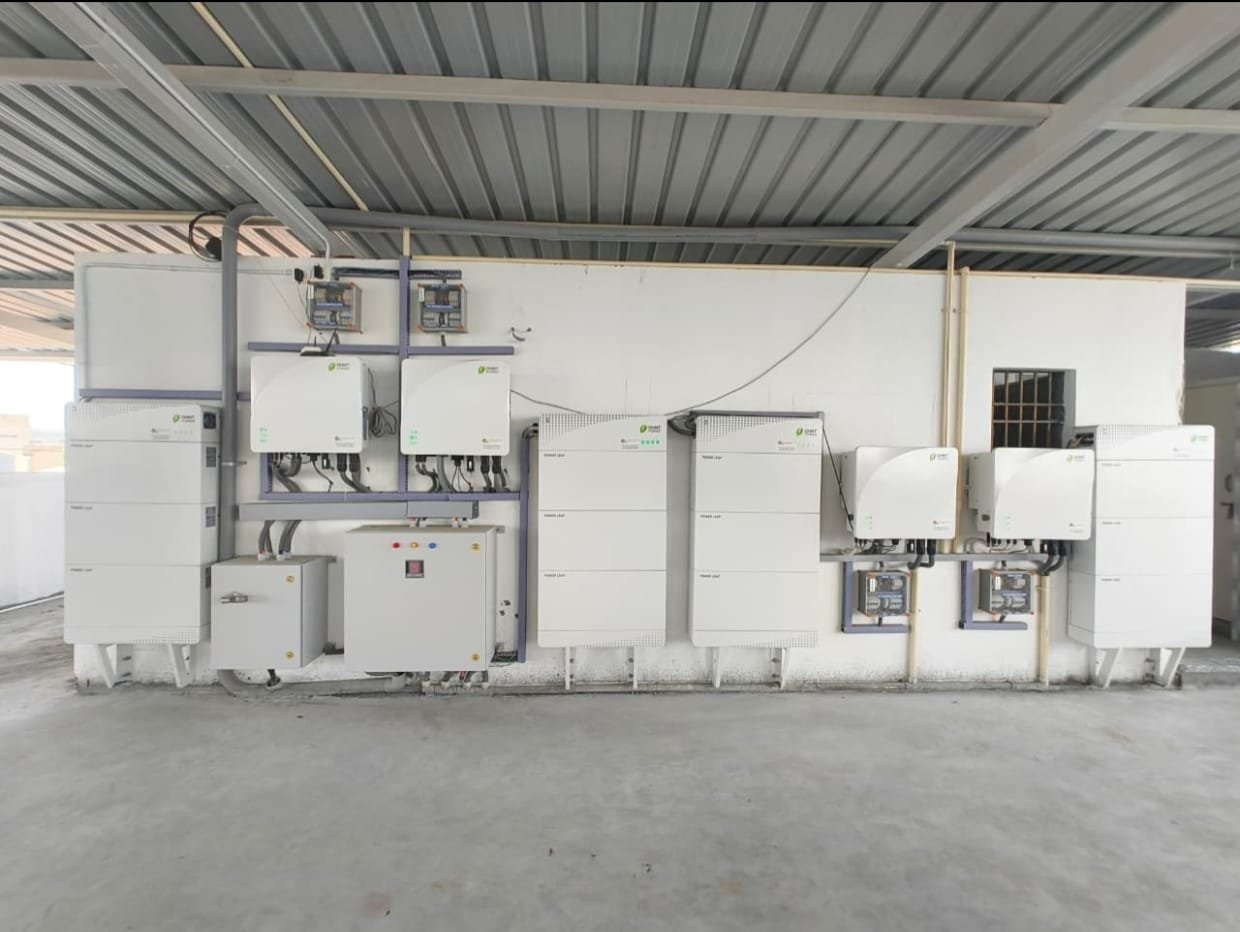
Inverter & electrical protection. Heavy commercial loads call for robust three-phase grid-tied string inverters with high ingress protection (IP65/IP66), surge protection devices (SPD) and remote monitoring.
-
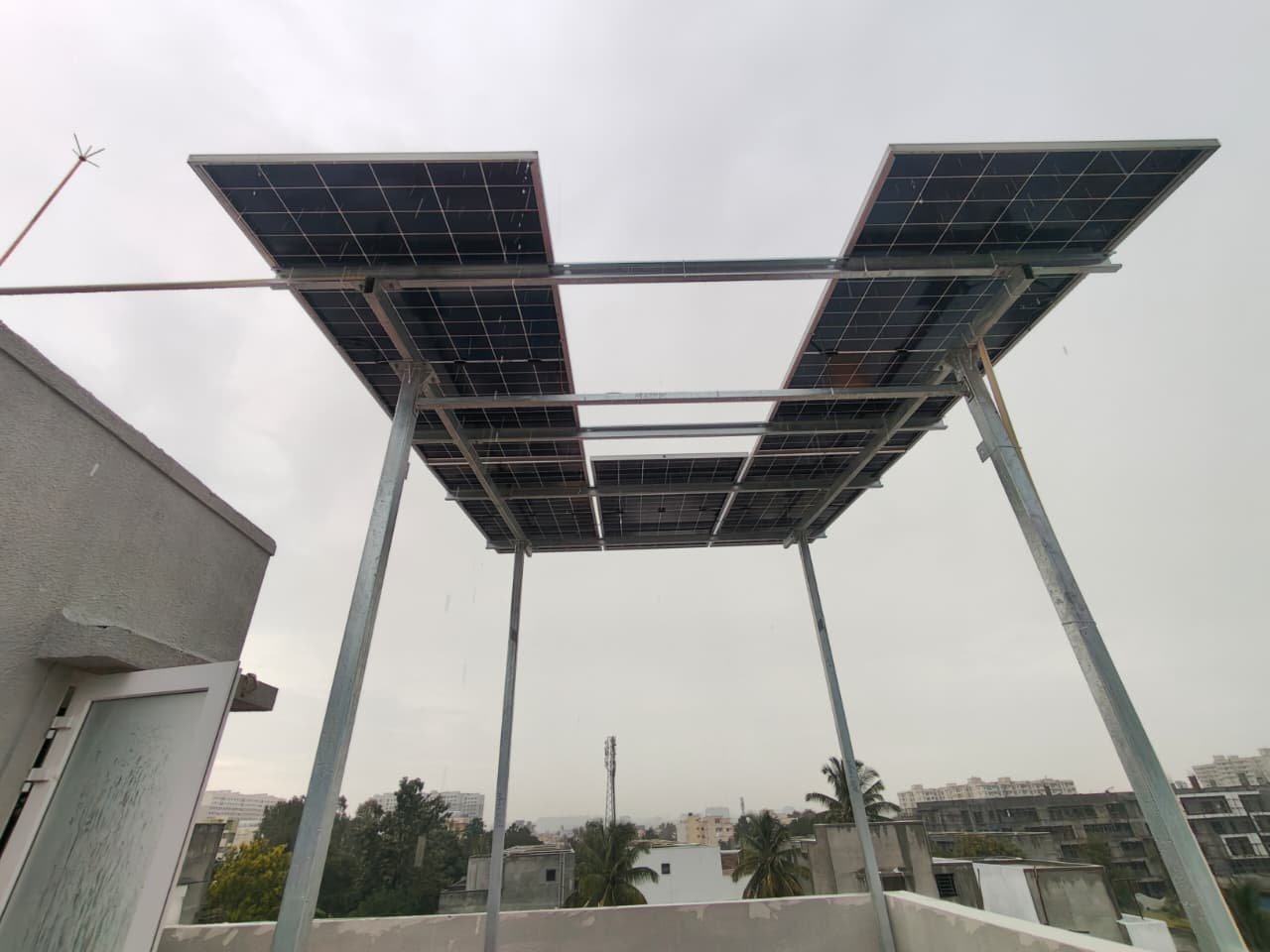
Elevated structural mounting. On high-rise buildings and factories, structures need heavy hot-dip galvanised steel to withstand high wind speeds and match 25-year structural warranties.
-
BESCOM net metering & approval fees. Grid-interactive systems need a bidirectional net meter, transformer inspection tests and official grid interconnection approval from BESCOM (Bangalore Electricity Supply Company).
ROI & Payback Analysis: A 100 kW Commercial Case Study
To see how the numbers work, take a typical manufacturing unit or commercial building in Bangalore installing a 100 kW grid-tied rooftop solar system. Every figure below is illustrative, not a quote.
The Assumptions
- System size: 100 kW grid-tied rooftop solar.
- Turnkey cost (CAPEX): approx. ₹42,00,000, including panels, inverters, structure, installation and BESCOM approval.
- Average commercial tariff: ₹8.50 per unit (kWh).
- Annual generation: about 1,46,000 units, based on Bangalore’s solar irradiation of roughly 4 units per kW per day.
- Depreciation benefit: up to 40% first-year depreciation for tax-paying commercial entities.
The Returns
3.1–3.5 yrs
Projected financial payback
25–30%
Internal rate of return (IRR) per year
25+ yrs
System operational lifespan
| Item | Illustrative value | Basis |
|---|---|---|
| Gross system investment (CAPEX) | ₹42,00,000 | Turnkey cost including BESCOM approval |
| Annual electricity savings (Year 1) | ₹12,41,000 | 1,46,000 units × ₹8.50 |
| Income tax savings (Year 1) | ₹5,00,000 – ₹6,00,000 (approx.) | 40% × ₹42 lakh = ₹16.8 lakh deduction; saving depends on your tax rate |
| Net effective investment | ~₹36,00,000 | CAPEX less Year-1 tax saving |
The payback range is a little wider than a simple “investment ÷ annual savings” sum would suggest because real projects also carry maintenance costs, gradual panel degradation and different tax positions. The tax saving shown is roughly what a business paying tax at 30% or above would see; it will be lower under concessional tax rates.
How Accelerated Depreciation Improves Payback
Under Indian income tax rules, businesses that own and use a solar power system can claim depreciation of up to 40% in the first year — far higher than for most other plant and machinery. That deduction lowers your taxable income for the year, which effectively reduces the net capital outlay of the plant and can bring payback forward by roughly 6 to 12 months.
Three things are worth confirming with your chartered accountant before you plan around it: the benefit applies only to tax-paying business entities; the full first-year rate depends on when the system is commissioned (an asset used for fewer than 180 days in the year generally gets half the rate); and the actual saving depends on your tax rate and tax regime.
Benefits Beyond Cost Savings
- A hedge against tariff escalations. Commercial electricity tariffs in Karnataka are revised periodically. Solar fixes your cost of generation for 25 years, often at an effective rate below ₹2.50 per unit.
- ESG & sustainability compliance. Rooftop solar helps facilities meet carbon-neutrality targets, supports LEED/IGBC green building ratings, and counts toward CSR and ESG commitments.
- Low maintenance overhead. Grid-tied systems have no moving mechanical parts, so periodic cleaning of the glass modules and basic electrical health checks are usually enough.
Partner with Aditya Green Energies for Commercial Solar
Commercial solar is a high-return financial decision, but it needs precision engineering, robust equipment selection and smooth regulatory compliance to deliver. Aditya Green Energies specialises in end-to-end commercial and industrial solar EPC (engineering, procurement and construction) across Bangalore and Karnataka — from site viability audits and structural engineering to Tier-1 component procurement, BESCOM net-metering approvals and long-term maintenance.
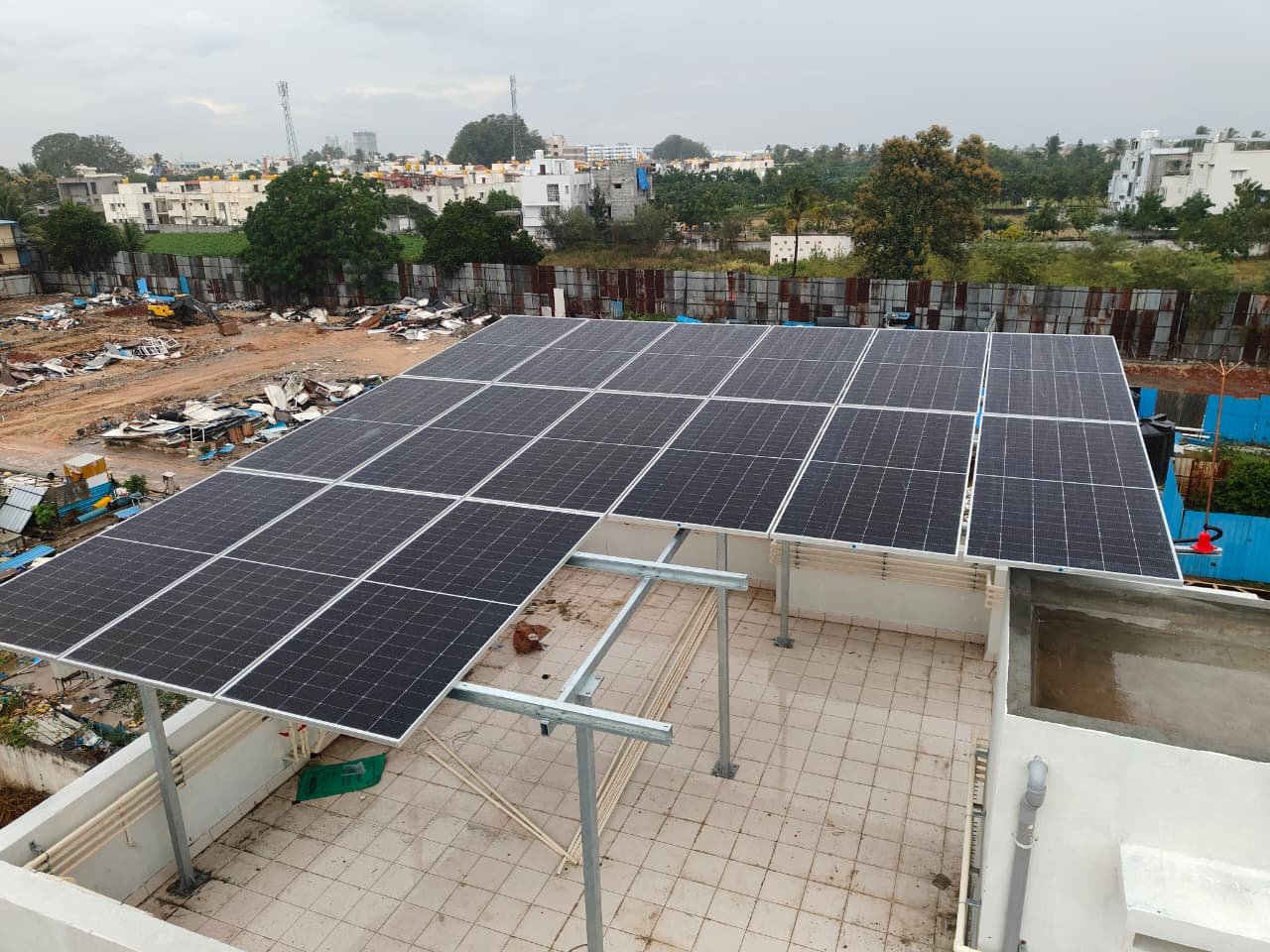
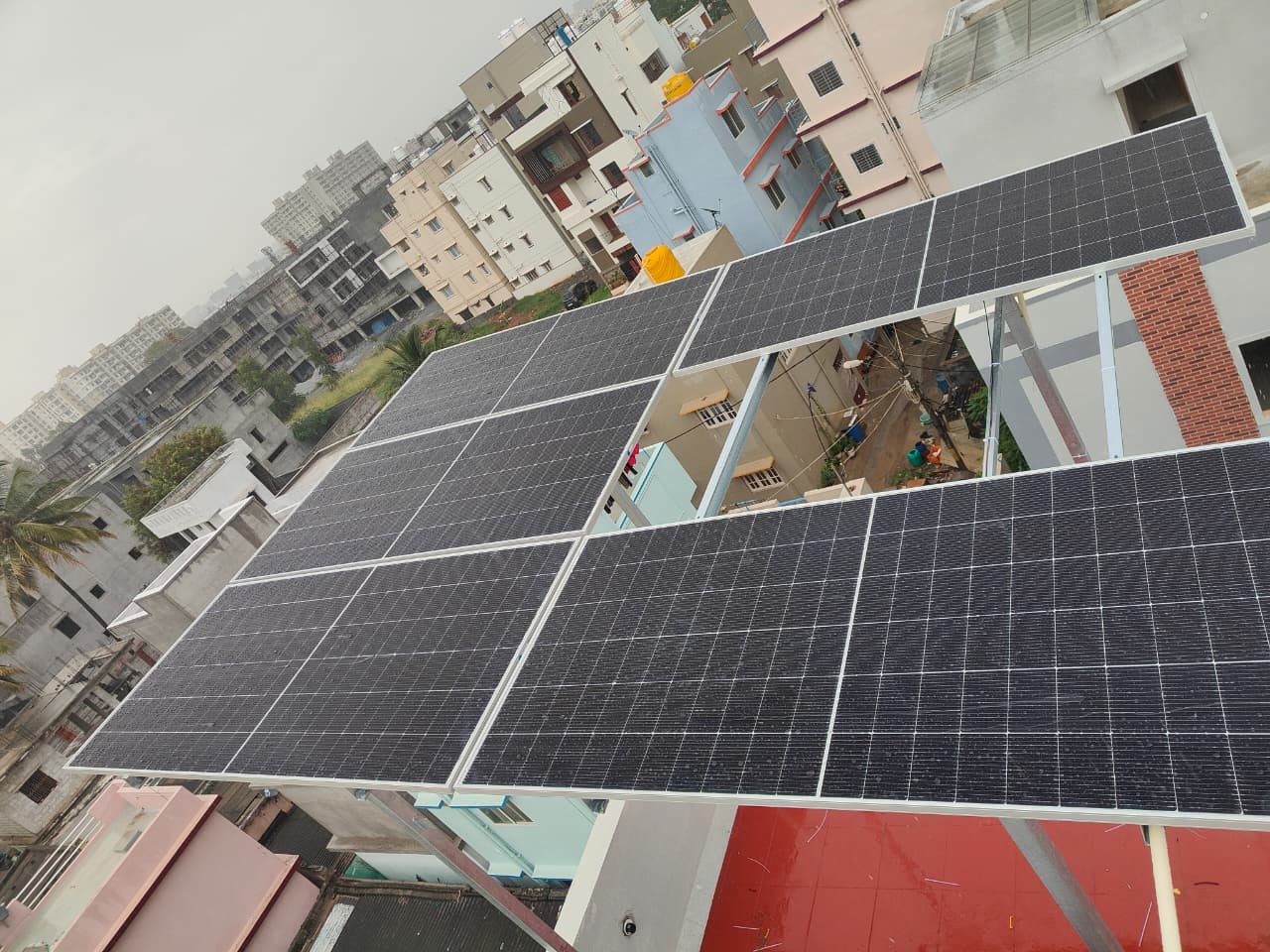
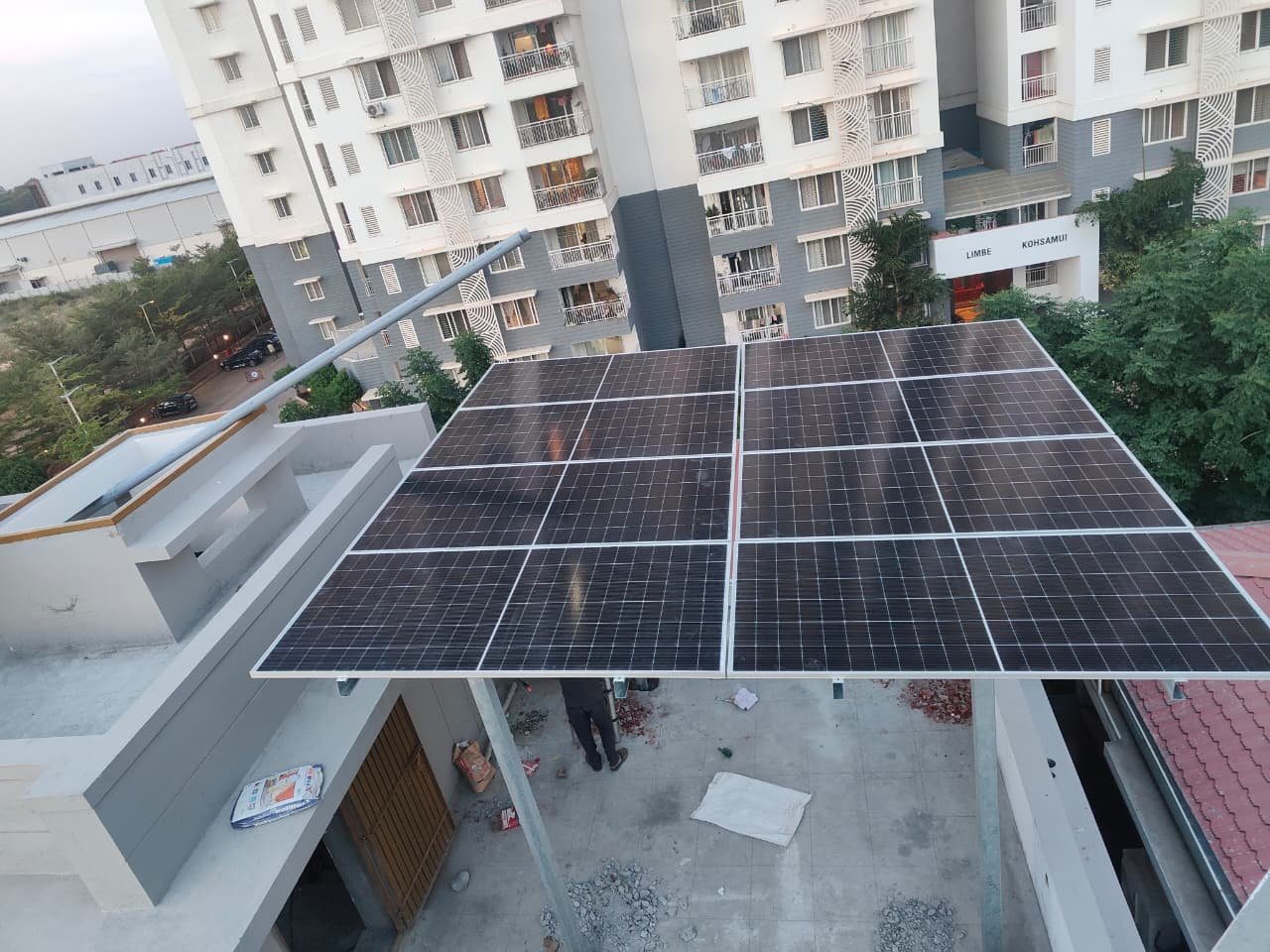
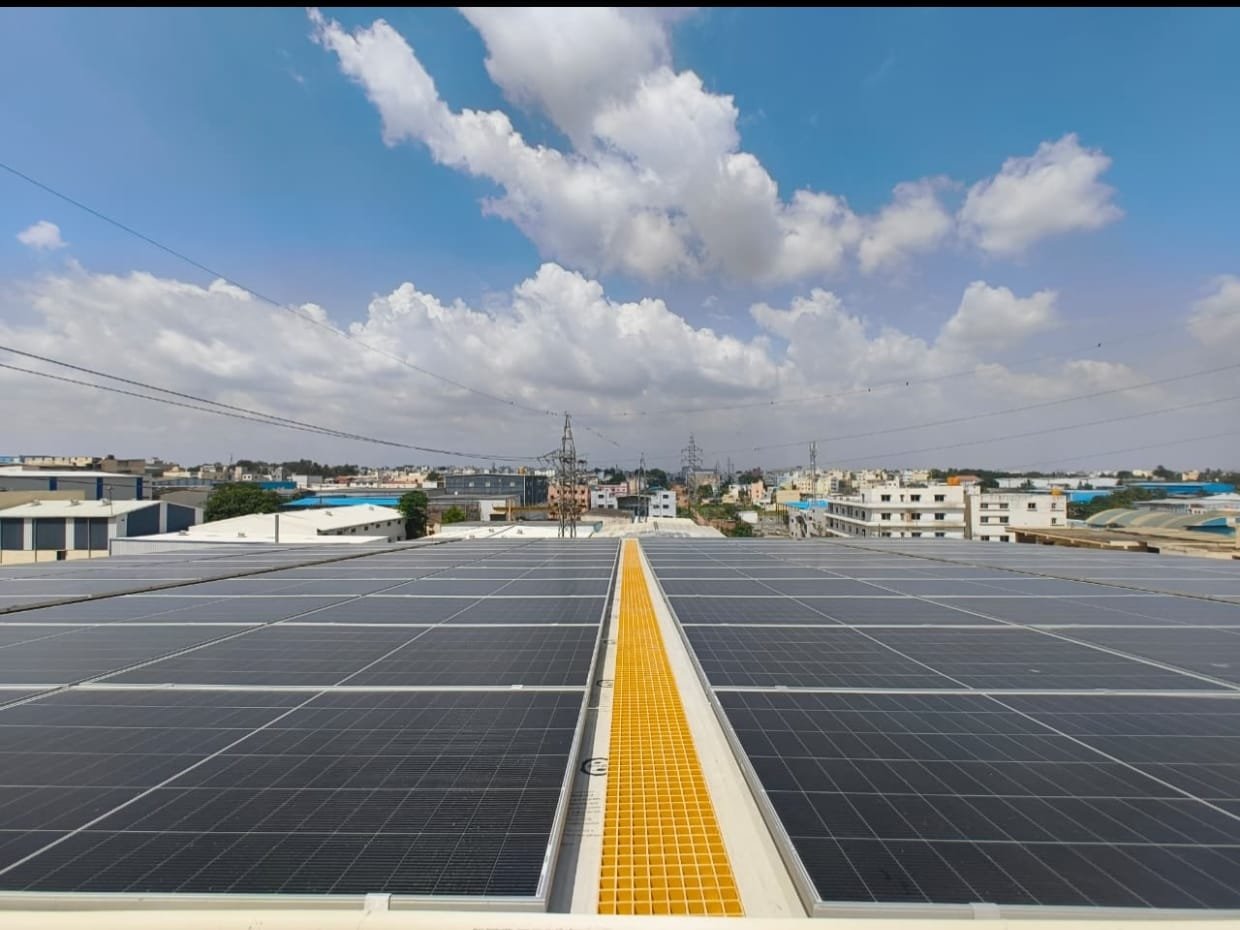
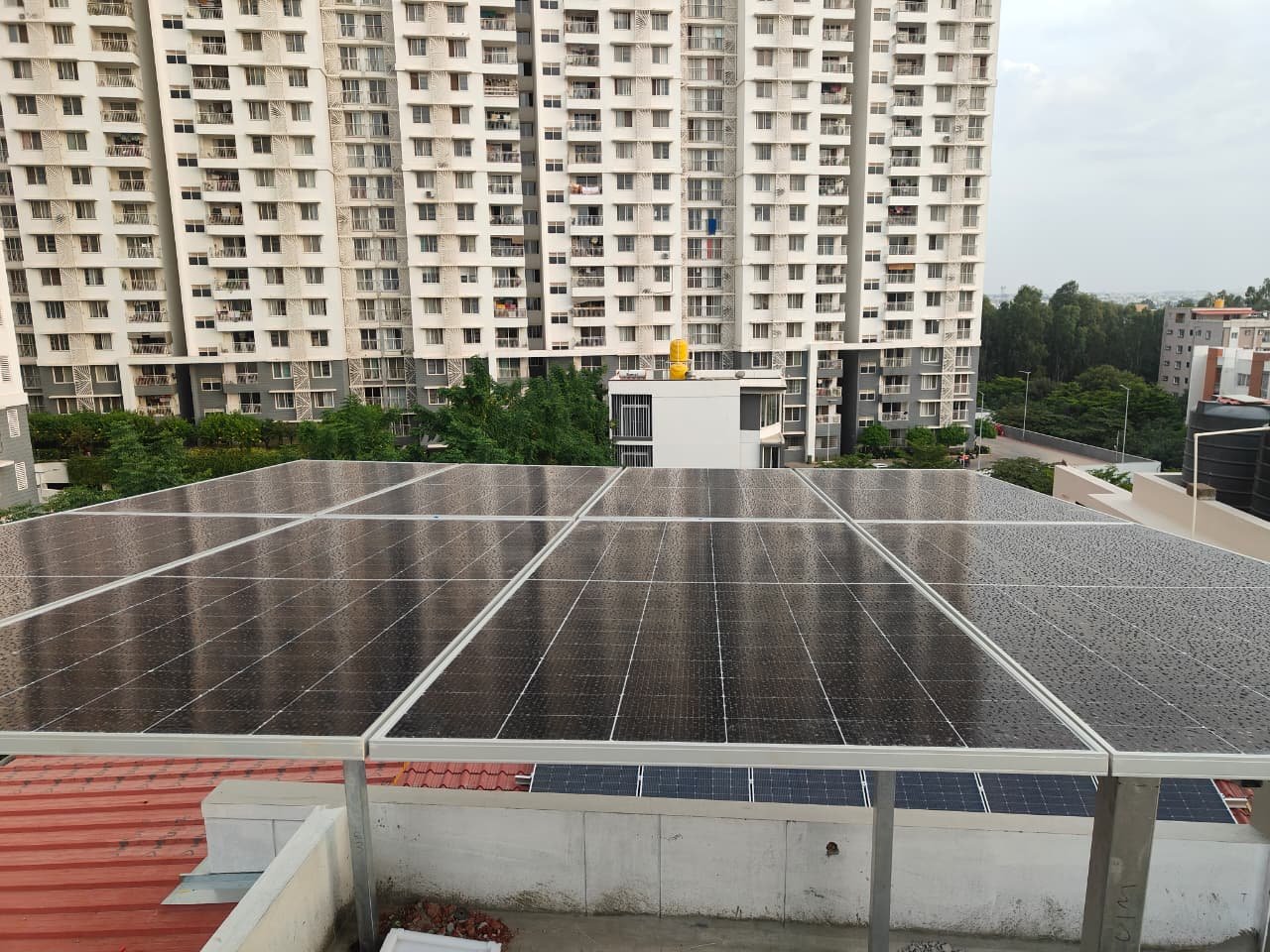
You can see completed residential, commercial and industrial installations in the project gallery, browse more solar guidance on the blog, or check the FAQ page for additional details.
Ready to cut your commercial electricity costs? Contact Aditya Green Energies for a free site evaluation, a custom ROI report and a turnkey commercial solar proposal.
Frequently Asked Questions
Is there a
government subsidy for commercial
solar installations?
Direct central subsidies such as the PM Surya Ghar scheme are meant for residential rooftop consumers, so commercial and industrial installations generally don’t receive a direct subsidy. They benefit instead through accelerated depreciation (up to 40%), GST input tax credit where eligible, and lower commercial power bills. Your tax advisor can confirm what applies to your business.
Can commercial
solar power run heavy machinery and
HVAC systems?
Yes. A grid-tied commercial system synchronised with BESCOM supply feeds solar energy straight into your main distribution panel. Heavy loads such as HVAC, chillers and machinery consume solar power first and automatically draw the balance from the grid when demand exceeds solar generation.
What is the
lifespan and warranty on commercial
solar panels?
Tier-1 commercial modules usually carry a 10 to 12-year product warranty and a 25 to 30-year linear performance warranty, typically guaranteeing around 80% or more of rated output at Year 25. Grid-tie inverters generally come with a 5 to 10-year standard warranty, which can often be extended up to 20 years.
How does net
metering work for commercial
properties under
BESCOM?
Excess solar electricity generated during weekends or low-load hours is fed back to the BESCOM grid, and the exported units are accounted for against your consumption under the net-metering terms set by KERC and BESCOM. A bidirectional meter records both imports and exports. Export limits and the credit mechanism are set by the regulator and can change, so confirm the current terms for your connection before sizing the system.
Final Takeaway
Commercial solar economics come down to four things: the size of the system (cost per kW falls as capacity rises), the tariff you pay today, your tax position, and how smoothly BESCOM approvals go. For a typical 100 kW system those inputs can add up to a payback of roughly 3 to 4 years followed by 25+ years of low-cost power — but the only reliable number is the one built on your own roof and your own electricity bills.
Want a custom ROI report for your building? Get in touch with Aditya Green Energies for a free site evaluation.